Showing posts with label Marketing. Show all posts

Tuesday, October 15, 2013

Samsung Gear: Doomsday for Watch Brands?

0 comments
Now I know how the Samsung Gear works.

Internet and Computing technology have brought many disruptive changes and transformed the way we live. Older technologies for which Digital Immigrants have nostalgic feelings are unknown to Digital Natives. Existing technologies are made obsolete while the new ones itself become irrelevant in a short period. So when Gear was launched, I wondered if we will witness any disruption?

Will Swatch, Rado, Rolex, Seiko, Citizen, Titan et al become obsolete? Or like how mobile phones have pushed Canon to exit the low end camera business, will watch brands be relevant only for a niche segment? Or will  it be the Gear and its likes become niche?

1. Watch is not a time machine: One thing that goes for the watch brand is that the device is not a functional piece that adorns our wrists. It is a symbol of status. Will mobile brands be able to crack that grip?

2. We have but one wrist: I know we have two wrists but watch goes to only one wrist. If the Gear and Watch have to co-exist, will we start wearing a device in each of our wrists? Will watch lose the race to Gear or will it maintain the hold on its citadel?

3. Gear is no replacement for a phone: If you have seen the video, you must have figured that the Gear doesn't do away with the actual phone. You still need the Note. If I can say, Gear is an extension of phone. Of course, Gear can exist on its own but it will be limited. So you will need to have two devices. I am already thinking of cost.

4. What does Gear offer?: Does Gear have anything substantial to offer? Does it solve any problem for us? Or does it make life easier for us? I believe that the Gear is largely for the Gatekeepers. Will it cross over to the main market, I am not sure.

But if the Gear does win the battle for our wrists, God save the Watch brands!

Imagine after 20 years, when the then Digital Natives look at a piece of today's watch in a museum, they will chuckle and wonder how the Digital Immigrants (that is today's Digital Natives) ever lived without a Gear! Will this happen? Only time will tell. 

Saturday, October 12, 2013

Micromax, the true Indian branding success

0 comments

I usually don’t read Annual Reports that are mailed systematically by the Company Secretaries of the organizations whose shares I have bought. More so if it is AGM address.

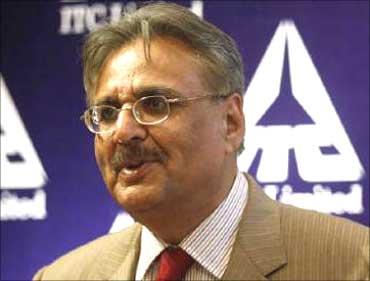
But for a change when the AGM address of ITC Chairman YC Deveshwar landed into my inbox recently, I felt like reading it. Maybe because the ITC shares have given me good returns and also the fact that ITC is a great case study of how the group has reinvented itself from being a predominantly Tobacco major into a well-diversified conglomerate. It is also probably the best example for a professionally managed business amidst the predominantly family owned businesses in India.

Mr. Deveshwar's address is very interesting and informative. I specifically like the part on THE INDIAN GLOBAL MARKET: DOMINANCE OF FOREIGN BRANDS. He quotes The ET Intelligence Group report - "...royalty payments by Indian arms of top MNCs have trebled over the past 5 years. The report points out that in FY12, 306 listed companies paid royalty and technical fees aggregating almost Rs 35,000 crores.” Further, a similar analysis by Business Standard of 75 BSE500 companies reveals that these firms paid out royalty equivalent to 32% of their net profits in FY12. This sudden surge he notes is after the removal of ceiling on royalty payments in 2009.

He also quotes media reports that this spurt in payments did not reflect any noteworthy value-addition from technology transfer by the foreign entities. These media articles also expressed concern at the adverse impact of this huge outflow on minority shareholders and on the exchequer.

Look around, one can easily find this dominance in our lives. Almost all the products that Indians consume are foreign brands. But then as Mr. Deveshwar says there are not many Indian success stories. He has listed few in that address. 

What probably he missed is Micromax! The great Indian mobile brand. A brand that has managed to make a mark for itself in a space that is dominated by the Korean Chaebol. 

And I must say in its fight Micromax had to face not only the competition but also the Indian mindset! 

Indian mindset: I am not sure what it is because of but Indians probably don't trust Indian brands. Maybe Indian brands actually do not deliver or as it is said we have a colonial mindset. For us, anything foreign is superior. Couple of years back when Apple was yet to revolutionize the smartphone market, it was the world of feature phones. When I bought one of those feature phones, a colleague exclaimed - Micromax! Yes, it was that degrading tone. Things have changed since then and Micromax seems to be fast catching up with Samsung. But has our mindset changed, I can’t be too sure.

Yes, it's a Me Too: Yes, but in many ways Samsung, LG or any brand is also a Me Too. The advantage of Android ecosystem is so, it provides opportunities for many. Everyone assembles!  

Branding, the game changer: In addition to lacking the drive to innovate, the Indian brands are also not very successful in branding. Thankfully, Micromax has been very savvy. In addition, Micromax products are attractively priced. 

Just like Galaxy, Optimus and Lumia, Micromax has managed to draw its own Canvas. 

The good news is that Micromax is not alone. Recently when I was planning to buy a phone and sought advice from some of my friends. They not only suggested Micromax but also spoke very highly of Karbonn and Xolo. Heartening! Couple years back, many Indians would not have considered them a great choice. 

As a person who has used Micromax product, I urge my fellow brethren to take pride in our local Indian brand. Not just because they are Indian but because these products 

  1. Look as great as any other
  2. Perform as great if not greater than others 
  3. Come at price points which are very attractive 
Unless you want to sponsor the royalty payments that Mr. Deveshwar's address talks about. 

But why only mobile phones, I think there are great Indian brands in almost all the categories. Take Dabur Red for example. Why not Bovonto or Kalimark! And why not Poomer

Go Indian! 

Monday, June 3, 2013

When Ads Speak The Truth

0 comments
Kudika vendam, appadiye sapiduven! 

Translates to I don't want to drink, I will eat it. That was the legendary line from Horlicks' ad.  

For a matter of fact, I myself preferred eating Horlicks as a kid rather than drink. I am sure many of my generation also used to do the same. It was more delicious that way. And the ad was not far from the truth. Not many ads can boast of capturing the true essence of what the product or service does? 

Last week, Indiblogger organized a bloggers meet in Chennai - The Ambi Pur Experience (). Though my blog is listed on Indiblogger, I have never been to any of their previous blogger meets, despite wanting to. Sabbatical and a nudge from a good friend, I found myself at the meet.


How many remember the Ambi Pur ad? It is a blind test conducted where people are made to sit in a car and share their experience about the perfume and how they felt. What the participants don't realize is that they are sitting amidst a mini garbage dump set up in the car. They are shocked to find that despite such filth the car smells fresh and nice.

If you own a car you know how cars can become smelly and unbearable to drive. My search for a good car perfume has never been successful. There are so many brands, some known and otherwise. I have tried few, including the previous Ambi Pur model. But never been satisfied with their performances. After sometime, one just doesn't feel the perfume.

The blogger meet replicated the blind test ad for the bloggers, more than 200 of them that day. I was eager to experience the brand promise. And I must say I was sweetly surprised to find the ad true. The car was filled with bad odor emanating sources like a shoe, plates with stale food...but the car smelt fresh. Later on a representative from P&G explained how the company had not only worked on the formula of product for great experience every time you use it but also how the design of the product has been changed to make it more effective.

I came back from the meet after collecting the complimentary pack of Ambi Pur Sky Breeze, one of the five variants available.

But then I prefer only camphor to keep my car fresh, nowadays, and didn't want to change that. But that Ambi Pur was so effective, I fitted it into the window AC in my bedroom, as suggested by the P&G representative.

I was not sure if the Ambi Pur would be effective considering the room is much larger than the size of a car. But then I switched on the AC and the result was instant. The room was smelling great. In fact it remained so for quite a while even after I switched off the AC.

Planning to try other fragrances.

Thanks to the blogger meet, as a customer I found a good product that delivers on the promise and as a marketer an ad that captured what the product delivers.

Wednesday, May 29, 2013

New Customers or Existing? That's The Question!

0 comments
I met my friend Deepak Chopra for coffee, couple of days back. A soft spoken Chartered Account, he often makes interesting observations. While discussing about a venture I was planning to be part of, he quipped, "Indian customers seek value for money. We don't buy products or service because they are low cost, we seek value. No wonder, that a Rs. 10 lac Renault Duster is selling like hot-cakes whereas Tata Nano, the world's cheapest car, has failed miserably."

Recently, I decided to upgrade our SD DTH connection to HD. Tata Sky is also running a seemingly good scheme for existing customers. At Rs. 1800, an existing customer could upgrade to HD. But I decided to upgrade to Tata Sky + HD, instead.

There was an online offers page on the Tata Sky website. Upon checking I found that there were interesting offers for a new customer. In fact, I realized to my disappointment that the offer for existing customer was not "as sweet as" the one for new customers.

Here are the details.

For existing customer

Cost: Rs. 4990/-
Value: Upgrade to Tata Sky + HD

For new customer

Cost: Rs. 6440
Value: Tata Sky + HD connection, 2 months of Grand Sports package free, 2 months HD fee waived, 2 Showcase movies plus Rs. 1000 Myntra gift voucher and 15% on purchases on another online ecommerce site.

How does this pan out?

Tata Sky + HD connection = Rs. 4990 (based on what is offered to existing customers)
2 months Grand Sports package: Rs. 820
2 months HD fee waiver: Rs. 200
2 showcase movies: Rs. 100
Gift voucher: Rs. 1000

Let's discount the 15% discount coupon for now.

The total value that a new customer gets from Tata Sky is Rs. 7110. Which would mean that a new customer gets an additional "value" of Rs. approximately Rs. 670.

I reached out to the customer support but as I had guessed the customer service support is not empowered to cross the line. Most of the time, they are dignified parrots, not only at Tata Sky but also other organizations. That will be another blog.

Anyway after some failed attempts, I felt a bit cheap to have done so much of calculations and trying to haggle for a paltry sum of Rs. 670.

It was then that I remembered an interview of CK Ranganathan of Cavin Kare making an interesting observation on the success of his Chik shampoo that catapulted a small shampoo company into one of the top FMCG companies in India, today.

He pointed out that customers in India are very diligent. He said customers didn't buy his sachets because they were affordable. He said that customers would calculate the cost of sachet shampoo and compare it with the cost of bottled shampoo before buying. Meaning, just because sachet was affordable at that point, customers would not buy it if the bottled shampoo was "cheaper" (read value for the money), overall.

But that is how we as customers are, I suppose.

Coming back to my DTH connection, I reached out to a top official at Tata Sky. After a small exchange, I realized that he also failed to understand the issue. Considering that my shift to Airtel would have to wait for six months and being impatient, I upgraded to Tata Sky + HD at a "not-so-sweet-deal" given to existing customers.

When I was doing MBA, I remember reading an interview of a Marketing Guru who urged companies to keep their existing customers happier than put all efforts to acquire new ones.

But I guess it is two in the bush is better than one in hand for many brands. 

Thursday, April 25, 2013

Packaging and labelling in India: Think Global, Act Global?

0 comments
I recently visited Mallorca, the beautiful island in the Mediterranean. My sister-in-law gifted us a holiday through a vacation ownership package that came their way. Being a villa with a kitchen, we could cook food. Saves costs and takes care of the needs of the Indian palate. While we did purchase most of the groceries here before departing, there were still some purchases to be made for which we visited a super market, there.

At the super market, I realised that all the product packaging and labels were in Spanish. Without an exception. I guess I was too naive to get surprised. In India, while there are some brands which use Indian languages, I felt English was the language of choice for packaging.

Now, it could be because I am getting old and hence I am getting more attached to own culture and language. Or maybe the marketer in me suddenly woke up. Why can't the packaging in India be in Indian languages?

Before you make judgements, let me clarify that I have nothing against usage of English but the usage of local languages in packaging is certainly a win-win for all. The consumer, the brands.

By the way, how many brands or products do you know off that have packaging in any local language? Nirma came to my mind, immediately.

After my return, I went through the house looking at various products. Not surprisingly, almost all used English. In fact, many had foreign language. For example, the new Vaseline moisturising lotion had Arabic script, the Gillette shaving foam and shower gel had French...But few, very few had any Indian language. Surprisingly, even Pazha Mudir Nilayam, the local Tamil Nadu retail chain that sells fruits and vegetables used English and no Tamil.

Consider this.

According to statistics, the percentage of English users in India is about 33% translating to about 330 million though the English speaking population in India is only about 9% which is only 100 million. Of course, after the United States of America, we have the second largest English speaking population in the world. But still the percentage of people that does not understand English is still 700 million and odd!

Before I move on, the difference between English speakers and English users is that the former can read, speak and form sentences, the latter can only read English letters. This means that effectively, the packaging and labelling is reaching to only 100 million Indians.

Also consider this, the population of Spain is about 47 million. The population of Tamil Nadu is 60! And remember there're many states that have far higher local language speaking population than English speaking. Why do, then, the marketeers shy away from using local regional languages in India?

Now, the challenge for marketeers could be that there are far too many languages for them to cover in India. Also, is it viable as the cost of packaging might increase?

But that brands will be able to connect better with their consumers by communicating with them means greater loyalty. Right? Unless the brands have assumed that in India it is ok to have the packaging in English. Or because English is aspirational and any presentation in local language might decrease the brand equity!

I spoke with few, very few though, about this subject. The thought seems to be that premium segment products, if in a regional language packaging, may actually deter them from buying the product.

 
But it may also be true that the packaging and labelling in products distributed in B, C and D centres may actually be in local language. I am not able to confirm that.

I am not suggesting that English be abolished. Just add the local language for that particular state. For example, all the Lays chips that go to Assam could have branding in both English and Assamese. Of course this means that the packaging itself will have to be redesigned as there will be more to add in the same space.

The brand consultants, advertising agencies and PR agencies should urge their clients to use local language in their packaging.

But more importantly it should be the mandate of political parties to ensure such a change is brought about. The regional parties who take upon themselves to promote the language, art and culture in their state must insist on this change. In Tamil Nadu, due to one such order, all shops and establishments are mandated to have name boards in Tamil.

But why only packaging and labelling? What about websites of corporates? How many corporates do you know who have website in Indian languages? I am sure very few.

When the entire corporate world seems to chanting - think global, act local - why must packaging be not so.

Wednesday, December 12, 2012

Underwear, the inside story

0 comments
Not that I haven't experienced it, but with age, I think, we start appreciating smaller things in life more.

And I must say that there are only few things in life that can match the happiness that a new snugly fit underwear can provide. While trying to collect data for blog, I visited this wiki page on undergarments. I realized the depth and breadth, the science and art of that humble piece of clothing.

I shall not try to get into it and will stick to the happiness part that a newly bought trunks gave me and my realization of how I have been buying a product based on brand equity rather than the merits. Now as you have learnt from the wiki page, there are undergarment for every occasion. I have been a boxer person for a very long time now. but after I took up tennis, my undergarment shopping list included trunks as well. Never brief, the reason for which for my own sake I will never even briefly provide.


Jockey has always been the brand of choice for boxers and when my shopping list expanded for the other type, the choice followed. Though I have bought other brands like Hanes, Crocodile and Tantex, I usually would go back to Jockey. My mind was conditioned. Recently, due to convenience of a store located on the drive back home coupled with absence of a Jockey shop, I bought Poomer trunks for tennis. Like a child who likes to wear a new dress with much awaited eagerness, I tried Poomer the very next day for my game of tennis.

The product was remarkable and I found great comfort. That was the trigger, I became inquisitive. I wondered if it was because I was trying a new brand hence Jockey trunk didn't feel as great or actually Poomer was a better product. Then, I immediately bought a Jockey trunk so that the experience is fresh and I could do a real experiential experiment.

Results? I must say Poomer, which is as affordable as Jockey, is definitely a better product than my brand of choice for boxers.

And here is how Poomer scores over Jockey in the following categories:

  1. Price: At Rs. 150 and odd, the Jockey is slightly higher priced. But the difference is not too much. Actually, in my mind, I position Jockey to be more premium than Poomer. In fact I didn't expect the latter to be so highly priced.  
  2. Elastic: The elastic in Poomer is the traditional old model meaning you can see it with the brand name inscribed on it. Padded with cloth inside, it does provide great comfort and hugs the waist (a rather large one of mine) well. Jockey on the other hand is not so loud, the elastic is clothed on both sides. It is important because many brands do not have the insides padded which leave a very strong impression on the tummy and even hurts. But certainly, the hug of Poomer is far superior than Jockey. In fact, I found the latter to be little slag.  
  3. Comfort: The First Day Test can tell you a lot. If it gives you the best feel on day one, you can almost certainly be sure that it will feel good for a long time before diminishing returns sets in. You get this elated feeling, at least I get it with the good new one.
  4. Fit: The problem with Jockey was not only the waist but also the legging (for want of another word). Both the elastic top and bottom leg parts roll down and up, respectively. This often causes irritation and discomfort.
  5. Durability: I observed that in terms of life both brands last almost equally.
Isn't this a classic example of promotion over product. How a good product with promotion can be better positioned and how a better product without promotion may not achieve the same. Of course, I could be wrong. Maybe both the companies have clear segmentation strategy which is not clear to me.

Before I close, I thought I will register my quote here on this wonderful subject of "andar ka maamla"

Undergarments are like second skin, we shouldn't be aware of its presence. The moment we are reminded, it means there is a problem with it.

Saturday, December 18, 2010

Why Android Will Win?

0 comments
Till about a couple of years back no one bothered about a mobile operating system. Mobiles were about talking and messaging. Then came camera, music players, gaming on phone. It was all going fine till the world slowly but surely started using phones not only for voice but also for data (Or should I say more data, messaging is also a form of data). And phones remained no more just phones, but transformed into smart phones. It may, in fact, be wrong to call them phones. They have become the device for communication, work and entertainment. But for now, let's call them smart phones.

Apple tasted blood through iPhone while still making great looking laptops/computers. Nokia was serving the masses. Blackberry was delivering emails to corporate executives. Microsoft was eager to repeat its desktop success through Windows Mobile. There were also iPAQs and Palm, guess they still do exist.  

Interestingly, the last two have been there for ages, but it's  Apple iPhone that brought freshness and zest. Google, while failing with Wave , created the buzz with Android. Of course, since then Blackberry wants boys. Nokia is desperately trying to lure people to Ovi. And, of course, Windows Mobile is fumbling. But the daggers are out! But, at this point, it looks like it's a straight fight between Apple and Google.

It was probably not an accident that Steve Jobs attended the Q3 FY 10 earnings call, as this report says. There are clear signs of war and while the market for such smart phones is still quite small, the players certainly are ascertaining themselves.

So, who could be the winner in the long run?

If I have to make a prediction, I would say Google is in the best position to be the winner or say garner larger market share.

And here is why I think so.

  1. History repeats itself: Have you watched Pirates of the Silicon Valley? For those who have tracked the history of computers know the pioneering efforts of IBM in standardizing the architecture of PC. The standardization and ripping a PC led to the creation of opportunity for different players who together grew the market. As Mr. Geoff Moore would agree, Google isn't trying to dominate the entire value chain. It prefers to become the Microsoft of mobile industry by giving a platform and letting device players and app makers to contribute their bit.
  2. It's all about App: Having conquered the PC market by ensuring that it was installed in all IBM and IBM clones, Microsoft ensured that it held the dominance over the applications built. And, of course, applications are the reasons we purchase computers, don't we! It's no different in the smartphone market. Every player has an application store. Apple as usual seems to have very high standards for app developers. That can go against it. Human beings have been rather lenient on not-perfect applications, it's the variety of choices that matters.
  3. Open or Closed, does it matter: I am quite skeptical like Apple about Open in the mobile world as much as Microsoft is or was in the PC world. Linux still hasn't broken Windows' back. Google's claim for Android being open actually doesn't make sense. As long as users get the apps they want, it shouldn't matter. But then openness could also mean faster go-to-market and choice.  
One of the biggest challenge that companies face when the market reaches the tornado phase is to ensure delivery. To me, Android seems in the best position today. It is developing a larger ecosystem than anyone else.

But then I am assuming a lot of things:

  • I am assuming that smart phone market will go through the same cycle as PCs. It may be entirely different. PC was lot about technology for a long time before it became mainstream and brand oriented. Mobile market is moving the other way around. 
  • The life of a mobile phone is rather short. In my own experience, 3 years is a good time for a phone. Except for contacts, I don't remember taking anything else to a new phone. Hence, stickiness factor maybe far less for mobile phones. 
  • Like I said in my earlier post on Apple, the company has never wanted to be the largest player in any market. It has always been at the forefront of bringing technology that empower users. It has also preferred to stay a chimp rather than a gorilla. Also, nothing to stop Apple from doing a Shuffle with iPhone.
  • I have completely discounted the role played by Telecom Services Provider as distributors. Not sure why this mode of distribution still hasn't caught up in India. If things were to go in that direction, a lot might change. 
It certainly would be interesting to see if there would be a real convergence of the mobile instrument with PC based equipments. The iPads/Tabs seem to be a natural, but not sure if that will be so. But if it is, then a larger market share would mean dominance. But again, if we are also moving to cloud,  the platform may not be important.

We certainly have interesting times in the air!

But I am curious, why don't have any excitement in the mobile chips space?

Wednesday, November 17, 2010

No Money Marketing, From the Horse's Mouth

0 comments
I have been always been in awe of Nikhila Kesavan. In addition to being one of the most talented theater personalities in Chennai and probably in India, she is also a successful PR professional and an ex-colleague. Nikhila is a perfectionist. Despite the fact that she was my junior, I would get jitters every time she reviewed a document that I created. She would rip it apart, highlight how pathetic my grammar was and how poor my sentence formations were. The other person who scares me equally is my wife. I am beginning to firmly believe that grammar is a girl-thing!

Back then, Nikhila and I were servicing Lason India, a leading BPO player in Chennai/India. They had a network of business associates, an innovative operations model. We were briefed that the business associate model had been taken to the next level and that Lason had set up what was probably the first BPO center in a village! Rural BPO! Though I initially suggested that we do a small press brief in Chennai, I changed it to a press junket to the obscure village in Thiruvallur District, at the last minute.

Being the person she was, Nikhila swelled with anger. She had already started working on the press meet in Chennai and now she had to start from scratch to organize the logistics for a larger event. But more importantly she was upset that we were not sticking to the initial plan. She demanded to know why the plan was being changed. And I didn't have an answer. It was a gut feel.

Thankfully, the event was a big success.

I couldn't articulate why I changed the plan. It was certainly based on the experience and understanding of what would or wouldn't work. 

Now that leads us to No Money Marketing by Jessie Paul. A veteran marketing professional who has worked with the leading software services companies in India (Infosys and Wipro) and played an important role in building the brand that they are today, she has no such articulation issues.

Also, I realize that there are two kinds of writers/authors. One who are academicians who research and look at the big picture. They give guidance with their theories and support it with observations. And then, there are those like Jessie who are doer-authors. No Money Marketing is like a ready reckoner. Read it, roll up your sleeves and get to work. The book is unpretentious and doesn't test your patience by giving models that are great to read but difficult to utilize. But it does have models that can be easily digested and provides a great framework to develop marketing campaigns. There are nuggets of wisdom which provide excellent cue to marketers who always work on a diet-budget.

This book is a must read for marketing professionals in the technology industry, especially those in the software services space. The challenge for players in this space is that most of them are Me-Too. Last time I checked the Nasscom member's list in 2007, there were more than 1000 software services company. The glory story is limited to the top 50 or 100. For the rest in that list, it is a tall order.

I liked two lessons, in particular:

  1. As I said, Jessie is a doer-author. This book is full of practical inputs for a marketer who wants quick solutions. But what is more important is that before she presents the ideas, she sets the context. First few chapters are dedicated completely for self assessment. While the tools and ideas are common, Jessie urges every company to self introspect and develop a strong unique story. She in fact provides many examples and thoughts on how it could be done.  
  2. The avenues for brand building. The chapter on Core Branding versus Surround Branding is very important. For many software services company India is not a market but they certainly do lot of brand building activities, here. While it may not directly bring in business but it does help in recruiting and retaining the talent. And of course, in a flat world, a term you will find Jessie has used just too often in the book, there is always a spillover.
As a professional who has practiced a few of the ideas and other times observed being practiced, I think this book is the ultimate guide for marketers in software services industry. A book that CEO of every software services company, especially the small and medium sized who do not have a differentiated offering and work on frugal budgets, must read. And if you need more help, there is always Paul Writer.

Sunday, October 31, 2010

Media Wastage or Halo Effect!

0 comments
Taking a brief is an integral part of a client servicing executive's life. I still remember, two questions that I always threw at a prospect or client were:

  1. Who is your customer?
  2. Who is your competitor?
Thinking about it, I don't think I will ask such fundamental questions, today. But that is not the point. If I was kiddish, I have got juvenile answers, too. The standard response in those days were:

  1. Everyone.
  2. No one.
Oh my, I would be so impressed with those inputs and scribble them down, mindlessly, on my note pad.

Couple of weeks back, Volkswagen (VW) created quite a buzz, in the real and virtual world, by publishing a talking ad for its to-be-launched Vento, in The Hindu and Times of India. One may find many faults. The sound was not clear, it didn't have a micro-site address...but the point is that certainly it met its objective. It managed to create Awareness, Interest and, if not much of, Desire

A few months back, I visited one of the PR agencies that handled VW account. During the discussions, I asked a young bright executive who was on the account whether Polo launch ad was a good. VW had done a newspaper with a hole ad, then. I went on to give the usual spiel that though Times of India was the largest publication, it certainly was not omnipresent and that the media in India is highly fragmented. I further suggested that VW could have considered conducting/sponsoring a major event which would have been inexpensive and managed coverage across all publications.

The young man told me that the Polo ad has created a lot of buzz. I, mentally, dismissed him, but now acknowledge it. And, this time, the Vento ad takes the print ads to another level.

In 2001, after a press meet, Srinivas, a journalist with Digital Age (a technology focused magazine from a splinter group of Express Publication) introduced me to a term which has since then become etched in my memory. He said that the future is for specialist publications. He went on to say that there was an enormous amount of media wastage. Just out of college and still in a soaking up mode, I loved the term. 

Little after that, Digital Age closed down. But I remain fascinated with the idea. Srinivas said that the general dailies were overrated. For a marketer they are such a waste. Logically, if someone wanted to buy a product or service, one would look into a specialist publication. After all, mainlines are, mass media. 

It does make sense at some level. There is no disputing that the prospective buyers of Vento and, certainly, Polo would be covered by Times of India and The Hindu. But are all the readers in the consideration set? 

Polo and Vento are different cars, targeted towards different audience. Their price points are different. Was there an option for VW? Would it make more sense to have advertised for Vento in a business magazine rather than a daily? I have wondered why car brands didn't (now, few do) advertise on Financial dailies? Wouldn't that have been a far more focused approach? 

But I guess these two ads are just launch strategy. The idea was to create a buzz with the topmost media to put in their creative. Exclusivity was the underlining factor. Create the Halo effect!

I am wondering to myself if the concept of media wastage is a waste. If segmentation can be used to be more impactful in communication considering that media options are quite diverse. Or is halo effect more important than wastage?

Marketer's Dilemma!

Monday, September 13, 2010

Employees In The Era Of Social Media

0 comments
Till such a time that we discussed and gossiped in the real world, it was fine. 

Then somewhere Web 2.0 happened. All of us, who were till then laymen and consumed content, were vested with extraordinary powers to create and distribute content with far-reaching impact. It has become a strange world, since then. Free-speech has assumed new proportions.

Couple of days back, I had this conversation with a friend who works for one of the largest IT Consulting companies in the world. He told me that as part of the recruitment process, the company does scan the blogs of applicants. Now considering that I intend to be a salaried employee with no interest in the entrepreneur-adventure, does my virtual verbal diarrhea have any repercussions for my career? Considering that it is easy to be watched and tracked, does my online outbursts hurt my chances?  

I have made some positive mentions about one of my ex-employers. But completely avoid writing anything negative about any of my employer, present and past. And, clients are absolute no-no. So much so, I usually think twice before writing anything negative about a brand. 

Call me a coward, if you want, but am rather very apprehensive about being very vocal on Internet.

Earlier, I had written about Customer Service in Social Media Era. The reason for social media becoming spitting bag is that it is easy for individuals to do so. Now, who wants to go to a website and fill out forms or call a 10 digit number, only to press a few more. But more importantly, social media has become top priority  within the Customer Interaction Management industry.

I had this conversation with an extreme social (new) media enthusiast. He felt that it is absolutely fine with someone expressing his views in the public space. If I recall correct, he said that every individual is also a consumer. And that one should share their experiences with brands so that others can make an informed decision. Quite valid, I think.

It was widely reported that an employee was asked to leave after he made some reference to an institution in a blog. The employee and the employer both denied that the separation had to do anything with the post. In another case, an employee in a client servicing industry tweeted with negative reference to an organization because its staff bus was being driven rashly. While, his employer and the organization didn't have a relationship in India, they were working together globally. There was no damage in this case, thought it did ruffle some feathers and left a bad taste, I heard.
So, what is the desired behavior? Should companies monitor an employee's online avatar? Can social media acts of employees be considered exclusive of his work area behavior?  

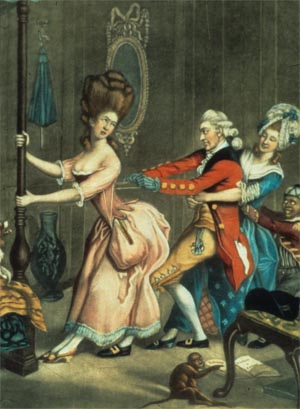
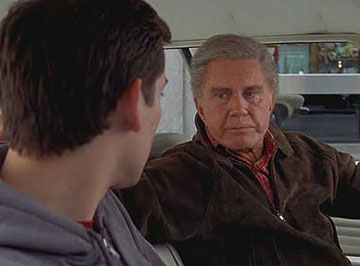
As I mull over these points, I am reminded of this profound quote from the blockbuster Spiderman about power and responsibility. I still remain confused.

Many companies, today, have evolved behavioural guidelines for employees. While I have not seen one, myself, I think it would certainly be drafted in such a way that it covers any liability arising due to employees' net act. On a side note, have you read any Sexual Harassment policy? Gives me jitters!

And, oh yes, Shashi Tharoor and Lalit Modi will go down in the history for being two people who lost their jobs due to Twitter, whether directly or indirectly. Now, I am mighty scared.

Tuesday, July 13, 2010

The Fall of Advertising & PR, And Rise of Social Media

0 comments
Cliched!

As much as it was when people used to say The Fall of Advertising & The Rise of PR. I remember, when I was doing my MBA, the advertising lecturer had mentioned that the advertising industry in India was worth INR 8000 Cr, that was 1999. Today, after the emergence of PR as another communication tool and predictions of its imminent death, the ad industry is supposed to be worth INR 40000 Cr! Did somebody say fall?

Does that mean PR has failed? No, in fact in the last 10 years (that is the time that I have been in the industry) PR has grown and matured. It is now acknowledged as an important and strategic communication tool. It hasn't killed advertising, though. Both co-exist. Initially, advertising was like the big brother of PR. In the early days, companies who advertised thought editorial coverage was their birth right. Difficult days! But the PR industry has grown from strength to strength. So has the understanding about PR amongst the client community.

Then, can we, with the emergence of social media, though still very nascent, make an aggressive hypothesis - The fall of Advertising & PR and The rise of Social Media?


Here Comes Everybody: The Power of Organizing Without OrganizationsConsider this. Clay Shirky in his book Here Comes Everybody has illustrated the emergence of technology and its detrimental effect on the existing industries and practices. The most relevant to this topic is the story of lithographers. Lithographer were in huge demand till the invention of printing press. The lithographers' role was erased, in a manner of speaking, the same way as the ink dissolves in water. In the short time that I had spent in the advertising industry, I have many times run to the newspapers with the 'positives' (looked more like negatives). Today, it's digitized. Disruptive technologies have had telling affect on industries.  

Search for it and you will find numerous reports on the decline in the popularity of newspaper. Of course, the link is more specific to US. In India and developing countries, it might be better. To quote Shirky's work, it is because Web 2.0 has made anyone with access to Internet a publisher. With the power to publish, the world has become, what I am tempted to call, Journalists' Paradise or should I say hell. Just like lithographers, it is often quoted that the breed of journalist (who hold exclusive right to publish) will die. Sounds logical. With democratization of journalism, it doesn't sound incredulous. On a side note, a trained calligraphist who is changing the way technology industry works is Steve Jobs!

What about other media? TV and Radio?

Before we move on let's consider some fundamentals:

  1. Human beings will continue to seek information
  2. Human beings will continue to seek entertainment
Now, what is communication about?

  1. Sender
  2. Receiver
  3. Medium
Elementary, wasn't it? But useful to consider what will be the future of the communication tools like advertising and PR, because they are about medium. Internet is also nothing but a medium, pretty much like TV, Print and Radio. Social Media, growing at a rapid pace, presents a new opportunity rather than problem. Today, both traditional advertising & PR and specialist individuals and agencies are cannibalizing this medium with their services. 

The problem is rather for media organizations. 

Future of media is likely to change dramatically. If YouTube is the way we will watch videos then how will the advertising model work. Look at IPL on YouTube for that matter. Internet telecast of events might offer advertisers the power to 'actually' customize their ads. Unlike the regular TV where one ad fits all, will TV through Internet offer the same flexibility as it does on PC. Also, if the TV software is made available on 'cloud' where a viewer can watch programs as and when he wants to, how will advertising work? How will the content be consumed? 

As for print is concerned, things are pretty much clear. Things have already changed. The problem that the print industry will face is the explosion of self styled journalists. But think about it, as consumers of entertainment and information we are very simple beings. Further, we also are emotional creatures becoming loyal and sentimental. Most often our choices narrow down to couple of options. The dust is likely to settle, there will be consolidation. 

What would be interesting to watch going forward is the future of social media consultancies? Would they become a special breed and a full fledged industry? Or will PR and Advertising industry master the new medium?

Tuesday, June 29, 2010

Research: Educating Consumers or Confusing 'Em!

0 comments
There was a time when I have had bath with Rin, yes the one that is used to wash clothes. Reason, that was the only one available at the station during our trip to Chennai from Guwahati. It was an almost four day's journey and in those days Indian Railways had an absolutely fantastic record of running late by 13, 14 hours.

Things are not that bad normally. Over a period of time, just like the amount of products that vie for my mouth-share, the number of products that have become part of my bath-share is incredible. There was a time when a soap was enough for the entire routine. Today, the shower gel goes to body; face wash to, of course, face; shampoo to clean the scalp and conditioner to nourish it. Is this sign of prosperity or what!

The role of research reports to 'educate' consumers and 'modify' consumer's behavior to change or enhance consumption pattern is unbelievable. And you thought lobbying happens only with the Government.

Shampoo brands through systematic 'education' urged us to not use good old soap for the scalp. Reason being that the scalp is different from body skin and thus requires specialist product. Once shampoo established, conditioners came in. Of course, then you have afterwash conditioners! Again, since skin on the face is/was different, to 'complement' soap, face wash rubbed in. I still remember when I was young, we were asked to shampoo once a week sighting that the daily application of shampoo would lead to hair fall. But over a period of time, research reports suggested that daily shampoo was better for scalp care.

Staying on the same set of products, while driving back home, Savitha said that a report suggested use of block-soap should be avoided. I was quite puzzled. On quizzing her, she said that the reports indicated that a block of soap attracts germs, hence not good for the skin. Did I read something in between the lines? Of course, I did. To me it looked like a report from liquid soap manufacturers wanting to shake up the block-soap market.

For so many years, people all over the world have been using block of soap. Today, it has become a bad practice!

I came across another such interesting case. A news article whose headline barked - Eat Eggs & Reduce Weight! Wow!

Eggs were a strict no-no for me, considering I am not only big built but also diabetic, I felt very happy. But as I went through the article, I decided to stay away from egg diet. The report 'proved' that a two egg breakfast helps reduce weight considerably. Because of its properties, eggs reduce hunger pangs. Thus, ensuring that a person eats less through the day! Yikes! I would eat as much after four egg breakfast as I normally do and add to the lipid treasure chest (or should I say waist) that I have built, already.

There was this joke in Reader's Digest that I came across. The writer deletes a line from her article stating that pregnant women should stop eating Chinese food. When Editor asks why, the writer replies that she thought over as to what pregnant Chinese women would eat!

Not to say that research reports are all farce, but the amount that is churned out to induce behavioral change can often confuse the consumers.

On something similar but very different, do watch The Story of Stuff.

Wednesday, June 23, 2010

Crush on Traditional Media in the Age of Social Media

0 comments
The other day, I took part in a discussion on Social Media for a program in NDTV Hindu. Had some nice discussion. A day or two later, a mail was sent by the coordinator giving information on when the program is likely to be aired. I checked if it's uploaded onto YouTube. Suddenly there was a spurt in request from other participants to know the same. When I checked as to why everyone was so keen, a participant responded "for obvious reasons".

Hmmm. For obvious reasons.

Now I believe that the obvious reason was for the participants to show their 'circle' that they appeared on TV. TV, did I say? Most of the participants were bloggers themselves. Most should be on Twitter. Meaning they were publishers, themselves. Then why this craze to show cameos in 'traditional' media.

Yes, I think there is still a charm in the traditional media. Since, the traditional media has entry to barrier for appearance, it becomes that much more desirable for the masses to appear on. Hence, the third-party endorsement, often heard in PR, is most sought after.

Also, there is this campaign for iNQ Mobiles, 'social mobile' phones. I chanced upon its radio ad campaign. The campaign urges the listeners to go to Facebook page and get clues for a 'treasure hunt'. Thought that was funny! No not iNQ Mobiles but Social Media needing the traditional media.

Long long ago while I was making a presentation at Twenty Twenty Media on Internet, I gathered that Internet was the only medium that allowed the entire gamut of Awareness-Interest-Desire-Action. True. But if it is true, why couldn't iNQ do a campaign over the Internet to draw crowd to its page?

Is it too early for the Internet medium to stand on its own? Will traditional media still be in reckoning in distant future?

Though on a different topic, this article in The Economic Times, today, has some nice points on why traditional media has an upper edge over the Internet medium.

Wednesday, June 2, 2010

All In My Mouth

0 comments


When I was a small boy, I would be excited to go to the shop and buy the toothpaste. But those were the days when toothpaste came, as Henry Ford would have put it, any colour - so long as it's white. But then things have changed. So has what I consume for my oral hygiene.

Tooth paste: As I said, paste for many years to me was the white uninteresting Colgate. So when the color TVs arrived and Close Up ads played, I finally felt there was some hope. At the age of 10, I took a firm control over the decision to buy the toothpaste. Maybe I love red color or probably the mouthwash included in the paste was the reason. One of the most difficult moments in life is having to deal or converse with someone who has a bad breath. And I have dealt with many. The fear that I should not have a bad breath was probably the biggest driver. Also being a gynephilic, one has to send the right breath out. Those days, in addition to Colgate, brands such as Binaca (later, Cibaca) and Promise were the other options. Till about 2 or 3 yearsback, I was always a Close Up loyalist.


Lekin Master Ji, app ke daanth! Remember this line from Dabur Red tooth powder ad. Well, Dabur products were never in the contention. But a sudden chance and eagerness to try Dabur Red has changed the course of my oral care journey. In fact, Dentist's suggest that one should change the toothpaste, often. I believe the germs in the mouth also get used to a particular paste as much as the mosquitoes to DDT. And believe me I made a right choice in Dabur's product. Dabur Red comes into your mouth like an electric shock. It is bloody spicy and leaves a burning sensation long (maybe because of laung/clove) after you have brushed. I must say no other toothpaste has refreshed me as much as Dabur Red has. Encouraged by Dabur Red, I decided to try other products from the company's stable. And, again, trust me, you will love Meswak for its taste and feel. Dabur Herbal is also good but comes third in my ranking. Encourage by the overall experience, I recently bought Babool. Seems to be ok. But I think I will go back to Red and Meswak.
Tooth brush: As important as a paste but probably the most least involvement category is the brush. I, too, was very indifferent and brand un-conscious. It had to be less than Rs. 20 and SOFT. A while back, Savitha went to a dentist for routine check. The doctor advised her to use Colgate Massager. Huh, Massager! So, as a good wife, she decided to pick on for me. And that was when I realized that the value you derive from a product is directly proportional to the price of the product. Use it to, to feel it.

Mouth wash: Have you seen the ad of Listrine featuring Cyrus Sahukar? The first time I used Listrine, my mouth exploded pretty much the way it has been depicted in the ad. Except, cheeks stayed intact. The alcohol inside your mouth does have a telling effect on your eyes. And after you have gotten used to Listrine, any other mouthwash is a compromise. I did use Plax, didn't work out for me.

Floss: Now, I am quite certain that for an average Indian, I am more adventurous as far as trying out new products for the mouth is concerned. But it is not that I am, basically or generally, like that. I have this problem of food pieces getting stuck between my teeth. So, on one such occasion, I decided to buy a Oral B Floss. I found it too cumbersome to use and the fine plastic did hurt my gums. On a trip to Health & Glow, I saw a pack of floss. It was a toothpick at one end and a U at the other end with flossing ribbon. Worked well for me. I don't want to share gory details, but I can tell you that if nose could smell in between the teeth, one can die. That is exaggeration for elucidation! While big brands also have this type of floss, they don't seem to be in the shelves.

Not only expensive products but also these inexpensive and colorful plastic tongue cleaners have become part of the daily routine. My mouth has become very sophisticated and demanding customer. It makes me wonder as to what percentage of the grocery bill goes just inside my mouth. And how many brands and products fight for a piece of my mouth.

All this for what? Well, health. And, of course, to have a non-smelly conversation.

But from Marketing perspective it is quite interesting to observe consumer behavior. In my opinion, most of the products that we use for oral health are low involvement category products with high customer loyalty, especially for tooth pastes. On the other hand, brushes, except for mature customers, doesn't attract much of loyalty/stickiness. On the other hand, penetration of mouth wash and floss should be very low. It took me more than 30 years, to take the giant leap and that too without any obvious reasons. Walk into a super market, the oral products do corner a huge space!

The fight for my mouth-share!

Wednesday, May 26, 2010

Exceptions to the Rule

0 comments

Marketing books suggest that in order to succeed, the product must be to the liking of the prospective buyer. And packaging plays an important role. Marketers do a lot of research to understand the behavior of consumers.

Ask a lady what her favorite colors are? Purple, Mauve, Lilac, Pink, Lavender, Peach...While men can't think beyond primary colors, women dismiss anything that isn't complicated. Read this nice post by Harsha Subramaniam on 'Why Men Are Colour Blind?'.

Savitha has often taken my mickey on the choice of gifts that my lady friends shower on me. Whether it is a T-shirt or a Body Wash, they seem to give me something of feminine taste. Things which are to their liking. But, if a man dares to wear a dress in 'feminine' color, he can be certain that there will be either explicit or implicit indications from people around that something is not 'straight'. A continued ignorance to such indications is definite path to be branded a Gay. No, not a happy man. Gay meaning homosexual.

So instead of wooing women, the correct market, the law of unintended consequences may apply and one might end up kindling interests from the not-desired market.

So remember that there are exceptions to the rule.

And I am STRAIGHT, Sam Boy!

Monday, May 3, 2010

Which Digital Camera Will I Buy?

0 comments

If I had to buy a digital camera based on the ads being aired on Television, currently, I would buy the Canon IXUS.

In addition to Canon, Sony and Nikon are the other brands that are competing for your attention.

But as I said, IXUS' ad with two young ones driving on a highway is the best in terms of kindling interest. The ad communicates the key features like the touch screen, zoom, HD recording...I loved the part, where the lady moves from pillion to the front, like Rani Mukherjee in the movie Ghulam, while approaching a tunnel. Even the statutory warning line urging viewers not to perform the stunts performed in the ad has been used very creatively. The ad says, These actions have been performed by professionals, please don't try them but try the Canon IXUS. Nice!

Sony's ad featuring Deepika Padukone is also good. The ad moves in a fast pace with the lady walking the ramp and taking a 270 degree panorama picture of the audience. There is a slight snooty-ness about the ad but does capture attention.

Nikon ad is nothing to write about. Anyway, a guy gets caught taking pictures of a pretty one by the girl's father. The father checks the pictures in the camera and finds some good pictures and get impressed with the boy. Well, the ad doesn't impress at all.   

Saturday, May 1, 2010

Dual Sim Phones: Why Biggies Are Not Interested?

0 comments


Mobile services were launched in India in 1996. For a long time thereafter, the mobile subscriber base kept low. Mobile phones were a desirable object. Very expensive to maintain. Even if someone had a mobile, the usage was limited to using it as a number identification device. Even receiving calls meant huge outgo.

My first 'brick' Motorola mobile phone was handed over to me by my colleagues who did not want to hurt their arms. Now those were the days when I neither had a mobile phone nor a girlfriend. Since I couldn't do much about acquiring a girl friend, I quickly grabbed the opportunity to get connected. But despite the connection, I avoided making calls, forget receiving calls. But yes messaging was free then.
Then things changed; quite fast they changed. New players arrived, prices came down. CDMA was launched. And that was when I acquired my first own mobile handset - Kyocera CDMA phone through Tata.


Well after a while I shifted to an Airtel GSM connection which I continue to use till today. I also changed my handset a couple of times. From a basic phone to a smart phone, I have seen it all, to say so.
Today, the penetration of telephone services is more than 60%. The total number of mobile subscribers is close to 563 million and the remaining are connect through a wire.

Going back to 2000, I finished my MBA and joined Integral PR which was owned by Mr. Deepak Talwar. Mr. Talwar was a very dynamic man, a very famous person in the Indian Political and Business circles. He used to visit Chennai office once a while. And that was the first time, I saw someone who had not one but two mobile phones. Wow, now that meant something!


2010.

My wife was handed a BlackBerry and a connection by her employer. She already had a personal connection. The lady is quite principled. She does not prefer using office landline or official mobile phone to make personal calls, unless it is an emergency. So she decided to keep her personal connection. So we bought a Micromax Q2 for her. A Dual SIM Phone with decent features and priced just below Rs. 3000.

Oh, did I say Dual SIM phone! But actually she doesn’t use that feature. She, in fact, carries two phones. Now, who wants to own more than one connection? Not everyone is a Deepak Talwar. Carrying two phones around, two bills and managing them, a pain. But I guess such a market does exist. This recent article in Brand Equity puts the numbers slightly higher.

“… For example, multiple SIM usage. “There’s definitely a multiple SIM phenomenon. It is evidenced by a recent spurt in the handset sales of multiple SIM phones. Among the 575 million connections, we have seen there are quite a number of users with multiple SIMs,” says Mahesh Prasad, president, Reliance communications. He estimates 70% to 80% of the total subscriber base is active and of these, 20% are multiple SIM users.”

In the olden days of the landlines, anyone who had two phones meant that the person was powerful and rich. Not that it was expensive but just that it was difficult to get a connection. Would that be true if someone has two mobile connections? Most certainly, I would guess.


So who might use a Dual SIM phone? I am not clear about that. Would it be an entrepreneur like Deepak Talwar or Gopal with whom I play tennis? Would that be top executives in corporate or yuppies? Interestingly, I have come across two young ladies who carry two mobile phones.

In my opinion, it could just be fad. Why is it that large players are not so keenly contesting for this niche space? You hear brands such as Micromax, Maxx, Fly, Orion, Spice…or the generic ‘Korean’ assembled pieces. It would be important to mention that Micromax is now the third largest mobile handset company in India. Is it just a differentiation tactic used by the players who aspire to make it big?

But if we assume that, today, two mobile connections is more amongst the rich and powerful, then those at the top may prefer an established brand. Will a CEO prefer to carry an iPHONE or a Blackberry with Dual SIM feature or a Micromax phone?

I am in Dual Mind, now.

PS: I would like to point out that I am not claiming that the top handset brands do not have Dual SIM phones, just that they are not as aggressive as the newer brands.