Showing posts with label Public Relations. Show all posts

Monday, November 18, 2013

Democracy and House Party

0 comments
At ITM, the five of us were a very close knit gang. After college, work split us though the bond was intact.

And now, after about ten years all of us are in Chennai. We all got together on Whatsapp. Suddenly, it felt as if we were back in the small room at Vanniyambathi Street in Mandaveli, though virtual.

We decided to to have a family get together. And that's when I realized how difficult it was to run the country in the democratic set up.

Here's how the rest of the story pans out or should I say fizzled out.

1. Date: Since weekdays were impossible, there was an agreement that it has to be on a weekend. But would that be on a Saturday or Sunday, that was the question. I preferred Saturday while other friend preferred Sunday. After a bit of persuasion, we decided on a particular Saturday. But soon after agreeing, few days later one member informed that he was not going to be available that particular Saturday. Now, thankfully we all quickly agreed for the next Saturday.

2. Make, Deliver or Go Out: Initially the plan was that it would be a potluck. Each household gets to make a particular dish. While the idea was good, after some considerations we decided to go to a restaurant. So we started discussing which place and type of food. At this point, I noticed that one particular friend wasn't communicating. So I called him. As I had anticipated he wasn't happy going to a restaurant. So we decided to order and I offered to host the meeting at my place.

3. Biriyani or Pasta: The decision was to order bucket biriyani. Just as we got close, a friend checked if we could order pasta instead of biriyani. After discussing the palate of people, we decided against it. Just as we finished the conversation, we realized we had nothing for the lone vegetarian in the gang. An additional logistic load.

Of course as the day neared, I had a hunch. So three days before our meeting, I called each of them to reconfirm. As I had thought, two of them said that something had come up at home and that they couldn't make it. That was three days before our grand meeting. Finally, there was no get together, no biriyani. Just some irritation and acidity.

Now if you were patient reading all these trivial details about dates and biriyani for an insignificant meeting between friends, I thank you. All these happenings reminds me of the state of our nation. It makes me wonder if Democracy is bane or boon to our country. Is it helping the country move forward or pulling it backwards?

Take Andhra Pradesh turmoil for instance. One party brings the state to a halt as it wants a separate state to be carved out. When a decision is taken, the rest bring it to grinding halt fighting against the division. Take my own state for example, the power starved Tamil Nadu. Kudankulam Nuclear Power Project was planned more than a decade ago. The construction of the plant started in 1998, now in 2011 we have protests about its safety.

Seems like democracy in India is only letting the nation take one step forward and two backwards. The consensus building exercise is a task juggernaut with too many voices and so many power centers.

Would an autocratic rule be the answer? Would someone who can rule with an iron hand be better for the country?

And then I think about this example and feel proud that India a democracy. Because the basic bedrock of democracy is that citizens are intelligent. And that ultimately the power lies in their hands.

Think about how China and India have dealt with one of their biggest problems - the burgeoning population. While China decreed one child policy with strict enforcement. Any exceptions was dealt with strongly.

India too had a brief enforcement through vasectomy. But otherwise, India's strategy to controlling the population growth was and has been based on - advocacy and public relations. No one can ever forget hum do, hamare do (we two, ours two). You could see it everywhere, the inverted red triangle. TV programs, Radio Streams, Hospitals...The messages appealed to people's good sense. Apprised them of the benefits. No coercion, no punishment. In fact, if I am not wrong there were no incentives, as well. It was freewill.

Becoming republic was probably the best gift that our leaders gave us. But I guess with it also comes along different voices often with narrow vision. With Federal system, the power becomes fragmented. And this is a scenario not just in India. The United States of America witnessed shut down recently. There are certainly challenges, but I guess this is the better form of governance.

In the end, it is a two way process. People have to exercise their choice carefully and their representatives in the Republic have to act responsibly. Idealistic? Is that too much to expect? 

Monday, June 3, 2013

When Ads Speak The Truth

0 comments
Kudika vendam, appadiye sapiduven! 

Translates to I don't want to drink, I will eat it. That was the legendary line from Horlicks' ad.  

For a matter of fact, I myself preferred eating Horlicks as a kid rather than drink. I am sure many of my generation also used to do the same. It was more delicious that way. And the ad was not far from the truth. Not many ads can boast of capturing the true essence of what the product or service does? 

Last week, Indiblogger organized a bloggers meet in Chennai - The Ambi Pur Experience (). Though my blog is listed on Indiblogger, I have never been to any of their previous blogger meets, despite wanting to. Sabbatical and a nudge from a good friend, I found myself at the meet.


How many remember the Ambi Pur ad? It is a blind test conducted where people are made to sit in a car and share their experience about the perfume and how they felt. What the participants don't realize is that they are sitting amidst a mini garbage dump set up in the car. They are shocked to find that despite such filth the car smells fresh and nice.

If you own a car you know how cars can become smelly and unbearable to drive. My search for a good car perfume has never been successful. There are so many brands, some known and otherwise. I have tried few, including the previous Ambi Pur model. But never been satisfied with their performances. After sometime, one just doesn't feel the perfume.

The blogger meet replicated the blind test ad for the bloggers, more than 200 of them that day. I was eager to experience the brand promise. And I must say I was sweetly surprised to find the ad true. The car was filled with bad odor emanating sources like a shoe, plates with stale food...but the car smelt fresh. Later on a representative from P&G explained how the company had not only worked on the formula of product for great experience every time you use it but also how the design of the product has been changed to make it more effective.

I came back from the meet after collecting the complimentary pack of Ambi Pur Sky Breeze, one of the five variants available.

But then I prefer only camphor to keep my car fresh, nowadays, and didn't want to change that. But that Ambi Pur was so effective, I fitted it into the window AC in my bedroom, as suggested by the P&G representative.

I was not sure if the Ambi Pur would be effective considering the room is much larger than the size of a car. But then I switched on the AC and the result was instant. The room was smelling great. In fact it remained so for quite a while even after I switched off the AC.

Planning to try other fragrances.

Thanks to the blogger meet, as a customer I found a good product that delivers on the promise and as a marketer an ad that captured what the product delivers.

Wednesday, October 6, 2010

4 Must Read Books In Technology

0 comments
When I shifted from a generalist PR agency to Twenty Twenty MEDIA, a specialist IT PR firm, I was unsure what to expect. After all, PR is PR. Whether it is IT or Automobile, does it matter I thought. But realized IT DOES MATTER ! :)

The one thing that I loved and dreaded was the need to do book summary as part of the Friday training program. Since 2000, when I finished MBA, I haven't had picked up a book. But now, R Narayanan (Naru), instilled the practice of reading books. It was like going back to school.

In the next few years, I managed to read some really nice books on the technology industry. Here are my recommendations on books that one should certainly read, if in the dynamic tech industry. 

Crossing the Chasm: Though my second recommendation is the one that I read first, this Geoff Moore's brilliant book is what I would call a foundation course. The book makes you understand why some technologies fail whereas other cross the chasm into the main market. The book revolves around Technology Adoption Life-cycle and explains how a technology moves though various markets which comprises of un-reference-able set of customers. It also enlists strategies that technology companies can make use of.

Selling the Wheel: If any book other than Dan Brown's Da Vinci Code that came closer to being racy is this masterpiece. Surprisingly, it is a wonderful fusion of fiction and technology market, though it may not be that obvious, thanks to the novel-type narration. No, it is not a sci-fi. The story is about a couple who invent the WHEEL and are at a loss as to how to take it to the market! I would recommend that one should read this soon after they have savored Crossing the Chasm. This book helps understand changes in consumers' requirements at different stage of technology penetration, how companies need to respond to those challenges and what sort of a sales person is required at each of these stages. I have always hoped someone will adapt it to make a play or movie.
Tipping Point: I was quite amazed when I started re-reading this interesting book by Malcolm Gladwell. I was connecting with the book much more than I did the first time. It has a wonderful model to create a successful communications model. While the Law of Few helps identify carriers, Stickiness Factor helps define the messages and the Power of Context provides insight on factors that influence the success. The book is packed with interesting case studies which is typical of Gladwell. Interestingly, this book mentions Geoff Moore and Crossing the Chasm. Delighted!

Fast Second: How Smart Companies Bypass Radical Innovation to Enter and Dominate New Markets (J-B US non-Franchise Leadership)Fast Second: This book is meant for large organizations on how to deal with a potentially disruptive technology that can threaten their base. It addresses the question of whether large organization should create or colonize. For me the book is interesting for the model on different types innovation based on the change in consumers' behavior and its affects the established firm's competencies and complementary assets.

Now, I am sure there are many books that can help you cross the knowledge chasm, but these worked pretty good for me. Am sure, they would be helpful to you, too. If you have any technology book recommendations that make a great read, drop a comment.

Monday, September 13, 2010

Why Salman Khan Is Right?

0 comments
As usual, there is something new for politicians and media to do. Salman Khan, on the eve of his much-awaited flick Dabaang, told a Pakistani Channel that the 26/11 attacks were hyped because "elite people" were targeted.

Why is everyone pouncing upon poor Sallu? In my opinion, he has made a great assessment of how media works and how human beings behave.

Now, I have couple of questions. Try to answer to yourself honestly. Top of the mind responses are better.

  1. Which are the top two structures that come to your mind from the 26/11 attack?
  2. Do you remember places which all the TV channels and media focused on?  
Here's some more.

  1. Do you remember the name of the terrorist caught for German Bakery case?  
  2. Do you remember the places affected in Coimbatore blasts? You probably might remember the Leader who was visiting the city, then. Do you?
While he is correct in his assessment that the more 'influential' people targeted more high profile it becomes, in 26/11 case, I think it is the structures and buildings. I urge that every communications person should develop such judgement that Salman has exhibited. I think terrorists understand this well. Interestingly, when I had suggested my client Dax Networks to implement Wi Fi on Dal Lake, I gave pretty much the same reasons. I told my client that if we do a project in Srinagar, we will get maximum mileage. Even a small event there rocks the media across the world.

I am currently re-reading Tipping Point. Interestingly, the book has great model for the communications industry. All the models in the book - Connectors, Law of Few and Stickiness - apply to this industry where 'hype' is the business.

More on Tipping Point and Communications once I finish reading the book.

Employees In The Era Of Social Media

0 comments
Till such a time that we discussed and gossiped in the real world, it was fine. 

Then somewhere Web 2.0 happened. All of us, who were till then laymen and consumed content, were vested with extraordinary powers to create and distribute content with far-reaching impact. It has become a strange world, since then. Free-speech has assumed new proportions.

Couple of days back, I had this conversation with a friend who works for one of the largest IT Consulting companies in the world. He told me that as part of the recruitment process, the company does scan the blogs of applicants. Now considering that I intend to be a salaried employee with no interest in the entrepreneur-adventure, does my virtual verbal diarrhea have any repercussions for my career? Considering that it is easy to be watched and tracked, does my online outbursts hurt my chances?  

I have made some positive mentions about one of my ex-employers. But completely avoid writing anything negative about any of my employer, present and past. And, clients are absolute no-no. So much so, I usually think twice before writing anything negative about a brand. 

Call me a coward, if you want, but am rather very apprehensive about being very vocal on Internet.

Earlier, I had written about Customer Service in Social Media Era. The reason for social media becoming spitting bag is that it is easy for individuals to do so. Now, who wants to go to a website and fill out forms or call a 10 digit number, only to press a few more. But more importantly, social media has become top priority  within the Customer Interaction Management industry.

I had this conversation with an extreme social (new) media enthusiast. He felt that it is absolutely fine with someone expressing his views in the public space. If I recall correct, he said that every individual is also a consumer. And that one should share their experiences with brands so that others can make an informed decision. Quite valid, I think.

It was widely reported that an employee was asked to leave after he made some reference to an institution in a blog. The employee and the employer both denied that the separation had to do anything with the post. In another case, an employee in a client servicing industry tweeted with negative reference to an organization because its staff bus was being driven rashly. While, his employer and the organization didn't have a relationship in India, they were working together globally. There was no damage in this case, thought it did ruffle some feathers and left a bad taste, I heard.
So, what is the desired behavior? Should companies monitor an employee's online avatar? Can social media acts of employees be considered exclusive of his work area behavior?  

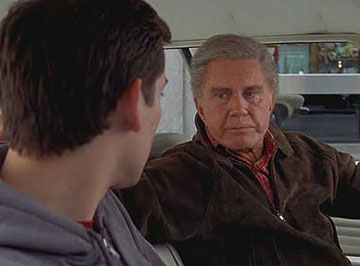
As I mull over these points, I am reminded of this profound quote from the blockbuster Spiderman about power and responsibility. I still remain confused.

Many companies, today, have evolved behavioural guidelines for employees. While I have not seen one, myself, I think it would certainly be drafted in such a way that it covers any liability arising due to employees' net act. On a side note, have you read any Sexual Harassment policy? Gives me jitters!

And, oh yes, Shashi Tharoor and Lalit Modi will go down in the history for being two people who lost their jobs due to Twitter, whether directly or indirectly. Now, I am mighty scared.

Wednesday, August 18, 2010

Why Blame PR?

0 comments
2010. Toyota recalls cars. Its Chairman is chided for not handling media better. BP spills oil. People say PR did a bad job in handling it. Mark Hurd resigns as HP Board recommends it. Bad PR strategy, many cry. If he had stayed, it would also have been a bad PR.

Has PR lost it? 


2003. I was still in the early days of my PR career. I was working with 20:20 MEDIA, India's largest IT PR firm. In India, PR was emerging as a strong communication tool.

In addition to few other clients, I handled Dax Networks, a medium-sized Indian networking company. It had made a name for itself during the initial days of Internet in India through its modems. It was those days when Internet meant robotic sounds and snail speeds. As the world became networked with complicated networking technologies and products, Dax was stuck with its modem-company image. And, that was our brief.

Modem is at the lower end in the value chain while Routers and Switches are technologically more advanced. Arunav Sinha, my boss, suggested that, to move away from the image of a modem company, Dax should focus on the emerging networking technologies. And at that time, Wi Fi was the in-thing. So, our PR campaign focused on Dax' plan to tap Wi Fi opportunity.

It was during this period that I, inspired by a program on Discovery, suggested to the client that they should Wi Fi-enable the Dal Lake. Now, for those who don't know Dal Lake is situated in the troubled Indian state of Jammu & Kashmir. Clients, who also hail from that state, agreed and we went on to implement the project. Media across India lapped it up. As Jammu & Kashmir was in the focus of international media, we received lots of coverage outside the boundaries, too.

And finally, Dax shed its modem-company image to become a leading Wi Fi company in India. It was a PR success.

Now, thanks for patiently reading on, if you actually did. No, this wasn't entirely a 'blowing-my-own-trumpet' exercise.

Now, coming back to the present, it is quite disheartening to note that every failure seems to be have some link to PR. While, I am happy to note that PR certainly has arrived, I am quite astonished that nobody is talking about operations failure but driving attention to how a corporate could have done better PR.

This indicates two things:

  1. Media has assumed the role of arbiter. And companies have come to think that if they win the battle with media they win the war in the market. 
  2. Image has become far more important to organizations than reality. And hence due to misplaced priorities, they take poor decisions. 
Media, whether it intended to be so or not, has become like the bully who decides the image. Actually, it does. But then media can never be an alternate to Operations.

Let me explain. Soon after the Dal Lake success, I was on a high. And it came to me as a shock when Dax decided to move away from Wi Fi image. It rather wanted to focus on Routers and Switches. I was very upset, but being an agency we created a new PR plan to usher in the change. In the hindsight, I think I was wrong. Though milking Wi Fi would have been an easier option, the technology had fast become a commodity. The company would have shifted from being a B2B to B2C. It would not have been an area of strength.

Mirzas knew their business well and chose the harder but intelligent route. Today, despite being a small company, they have become one of the top three networking companies in India. Remember the market has players like Cisco, Nortel, 3COM, Juniper...

The point is that when PR starts to drive the business goals, then there is certainly some problem. Read this post by Mr. Swaminathan S. Anklesaria Aiyar, CSR can cloak irresponsibility.

There are some pointers for every corporate:

  1. Let Operations Strategy decide the PR plan. Too much of a gap between perception and reality is always dangerous. More so, if there is too much perception and little reality.
  2. Media is important but not all-important. Leverage it, but don't let media lever you. This doesn't mean you can ignore it. Create an inclusive strategy. But as I said absence of operations and trying PR means you are lying.
  3. Media or for that matter all of us have become too impatient. We are in the world where we have become unforgiving. This is especially more true for the Social Media tribe. Just because social media is visible and writing negative, don't stumble. Difficult things do take longer to achieve.
I remember a hypothetical case study of an airline that a client of mine once shared. Unfortunately, an aircraft crashes and no passenger survives. The CEO has to address different audiences - customers, employees, agencies, investors and media. What should be the order of his priority? Whom should he address first and whom the last?

What will you do? Whatever you do, don't blame PR!

Tuesday, July 13, 2010

The Fall of Advertising & PR, And Rise of Social Media

0 comments
Cliched!

As much as it was when people used to say The Fall of Advertising & The Rise of PR. I remember, when I was doing my MBA, the advertising lecturer had mentioned that the advertising industry in India was worth INR 8000 Cr, that was 1999. Today, after the emergence of PR as another communication tool and predictions of its imminent death, the ad industry is supposed to be worth INR 40000 Cr! Did somebody say fall?

Does that mean PR has failed? No, in fact in the last 10 years (that is the time that I have been in the industry) PR has grown and matured. It is now acknowledged as an important and strategic communication tool. It hasn't killed advertising, though. Both co-exist. Initially, advertising was like the big brother of PR. In the early days, companies who advertised thought editorial coverage was their birth right. Difficult days! But the PR industry has grown from strength to strength. So has the understanding about PR amongst the client community.

Then, can we, with the emergence of social media, though still very nascent, make an aggressive hypothesis - The fall of Advertising & PR and The rise of Social Media?


Here Comes Everybody: The Power of Organizing Without OrganizationsConsider this. Clay Shirky in his book Here Comes Everybody has illustrated the emergence of technology and its detrimental effect on the existing industries and practices. The most relevant to this topic is the story of lithographers. Lithographer were in huge demand till the invention of printing press. The lithographers' role was erased, in a manner of speaking, the same way as the ink dissolves in water. In the short time that I had spent in the advertising industry, I have many times run to the newspapers with the 'positives' (looked more like negatives). Today, it's digitized. Disruptive technologies have had telling affect on industries.  

Search for it and you will find numerous reports on the decline in the popularity of newspaper. Of course, the link is more specific to US. In India and developing countries, it might be better. To quote Shirky's work, it is because Web 2.0 has made anyone with access to Internet a publisher. With the power to publish, the world has become, what I am tempted to call, Journalists' Paradise or should I say hell. Just like lithographers, it is often quoted that the breed of journalist (who hold exclusive right to publish) will die. Sounds logical. With democratization of journalism, it doesn't sound incredulous. On a side note, a trained calligraphist who is changing the way technology industry works is Steve Jobs!

What about other media? TV and Radio?

Before we move on let's consider some fundamentals:

  1. Human beings will continue to seek information
  2. Human beings will continue to seek entertainment
Now, what is communication about?

  1. Sender
  2. Receiver
  3. Medium
Elementary, wasn't it? But useful to consider what will be the future of the communication tools like advertising and PR, because they are about medium. Internet is also nothing but a medium, pretty much like TV, Print and Radio. Social Media, growing at a rapid pace, presents a new opportunity rather than problem. Today, both traditional advertising & PR and specialist individuals and agencies are cannibalizing this medium with their services. 

The problem is rather for media organizations. 

Future of media is likely to change dramatically. If YouTube is the way we will watch videos then how will the advertising model work. Look at IPL on YouTube for that matter. Internet telecast of events might offer advertisers the power to 'actually' customize their ads. Unlike the regular TV where one ad fits all, will TV through Internet offer the same flexibility as it does on PC. Also, if the TV software is made available on 'cloud' where a viewer can watch programs as and when he wants to, how will advertising work? How will the content be consumed? 

As for print is concerned, things are pretty much clear. Things have already changed. The problem that the print industry will face is the explosion of self styled journalists. But think about it, as consumers of entertainment and information we are very simple beings. Further, we also are emotional creatures becoming loyal and sentimental. Most often our choices narrow down to couple of options. The dust is likely to settle, there will be consolidation. 

What would be interesting to watch going forward is the future of social media consultancies? Would they become a special breed and a full fledged industry? Or will PR and Advertising industry master the new medium?

Wednesday, June 23, 2010

Crush on Traditional Media in the Age of Social Media

0 comments
The other day, I took part in a discussion on Social Media for a program in NDTV Hindu. Had some nice discussion. A day or two later, a mail was sent by the coordinator giving information on when the program is likely to be aired. I checked if it's uploaded onto YouTube. Suddenly there was a spurt in request from other participants to know the same. When I checked as to why everyone was so keen, a participant responded "for obvious reasons".

Hmmm. For obvious reasons.

Now I believe that the obvious reason was for the participants to show their 'circle' that they appeared on TV. TV, did I say? Most of the participants were bloggers themselves. Most should be on Twitter. Meaning they were publishers, themselves. Then why this craze to show cameos in 'traditional' media.

Yes, I think there is still a charm in the traditional media. Since, the traditional media has entry to barrier for appearance, it becomes that much more desirable for the masses to appear on. Hence, the third-party endorsement, often heard in PR, is most sought after.

Also, there is this campaign for iNQ Mobiles, 'social mobile' phones. I chanced upon its radio ad campaign. The campaign urges the listeners to go to Facebook page and get clues for a 'treasure hunt'. Thought that was funny! No not iNQ Mobiles but Social Media needing the traditional media.

Long long ago while I was making a presentation at Twenty Twenty Media on Internet, I gathered that Internet was the only medium that allowed the entire gamut of Awareness-Interest-Desire-Action. True. But if it is true, why couldn't iNQ do a campaign over the Internet to draw crowd to its page?

Is it too early for the Internet medium to stand on its own? Will traditional media still be in reckoning in distant future?

Though on a different topic, this article in The Economic Times, today, has some nice points on why traditional media has an upper edge over the Internet medium.

Wednesday, May 12, 2010

The Significance Of PR Tools

0 comments


For the first few initial years in PR, I never consulted with clients on the PR tool to be used for a particular announcement. It just happened. In fact, most of the time the decision was made by the clients. 

Many wrong and few right decisions, now, how and when a PR tool should be used is clearer. The significance of each PR tool and scenarios of use is important to understand for any PR professional. In this regard, I have made certain hypothesis based on the limited experience I have in the industry. And here is the matrix that I suggest.


Before I move on there is a bed rock principle that any PR professional has to respect.  The effectiveness of a PR tool is directly proportional to the existing brand value. This simply means that just because a tool is powerful, doesn't mean that the results are guaranteed. Like everything else in life, brand is created over a period of time and has to be worked upon. There is not overnight success.

Another point to be kept in mind is that while PR is one-to-many communication, the tools can either be one-to-one or one-to-many. The size of coverage is probably the best measure of success in PR. And how much reach a PR tool achieves multiplies the visibility.
 
  • Press release: Probably the most widely used tool, press release is the best for a wider reach with least effort. In fact, press release or press information sheet, a derivative of press release, is the official communication document that is the unit of communication. While it does provide extensive reach, it has become a rather weak. This probably because of too many of them are in circulation and the space is limited. And due to the competition, media houses also prefer exclusivity.
  • Edit opportunities: This is a term I have borrowed from my stint at Twenty Twenty Media. Often it is journalist driven. While the story itself can be big, the total coverage that a particular corporate gets is often limited. But just because the size of actual coverage is low, doesn't mean that it is not effective. In my opinion, industry stories are balanced and one can become part of the entire consideration set for a prospect.
  • Interview: A powerful tool not only for coverage but also to build relationship with a journalist. It usually results in large coverage. But because these are exclusives, the resultant coverage is limited to a particular publication. Interviews are also preferred by journalists, nowadays, as they get their bylines. On a side note, interviews, also referred to as one-on-one, is not such a preferred tool by journalists from the old school of thought. They believe that too many one-on-ones become one-by-one. What happens, practically, is that a journalist has to wait while the other journalist finishes the interview as these are arranged sequentially. In fact, I, too, detest this modus operandi. I think it is sheer waste of time for the spokesperson and the client servicing PR executive. The spokesperson often parrots the same story over and over again while the PR executive, by second interview, feels that he can play the recorder himself. In such cases, a press briefing is better suited. More on that later.
  • Placed article: Also referred to as contributory article, it is probably a difficult task to achieve. Some call it white paper or thought paper because it is supposed to be 'neutral' with loads of cues. It is supposed to position a spokesperson as 'thought leader'. Such a bastardized term! Sorry for that language. 
  • Junket: Often when a widespread coverage is required but there is a limitation in movement, media is invited to a single place. It is a confluence. Usually resorted to for a very large announcement. A lot of logistical coordination and media planning is required for such announcements.
  • Press conference: Used to be my favourite tool. Single effort, big coverage, wide reach. But yes, a lot of learning, too. In the earlier years, this format resulted in nail biting and last minute follow ups. A variant of press conference is a briefing. Briefing is a better alternate to one-by-ones that I had mentioned earlier.
Now it is not that easy as it sounds. Just because press conference or briefing gets big coverage and wide reach doesn't mean it is the Brahmastra, panacea for all communication needs. A PR professional must remember two important criteria:

  1. How many messages do you want to share and what value is it to the media?
  2. Do you want to communication to be open-ended or controlled?
An understanding of client, the industry and media becomes extremely critical to make the decisions. This blog cannot give all answers.

Monday, April 12, 2010

The Role of Tracking and Clips in PR

0 comments
I hadn't heard of public relations (PR) till the final year of MBA. It was only after Manoj, my classmate from school who then went on to become my senior at MBA had joined Genesis PR in Bangalore, when I first heard about Public Relations.


In 2000, after completing my MBA, I went on to join an ad agency. Couple of months later, Manoj changed his job and joined Integral PR in Chennai. Being a close friend, he didn't look beyond me, when it came to expanding his team. Since then I have spent little more than 7 years in the industry.

Besides faxing and following up with media for a press release or conference, if there was one thing which I really liked about PR was reading and tracking newspapers. I had been told since childhood that reading newspapers was a good habit and that it improves one's language and knowledge. Reading newspapers gave me loads of information which at times translated to knowledge, at times a tool for interactions and other times positioned me as someone knowledgeable. But most often newspapers give you information. It depends how one translates it into experience and knowledge.

Ok now my objective was not to propagate the habit of reading newspapers.

Manoj laid down two commandments:

1. To track every client clip
2. Ensure the clip is not misplaced and it goes on to become part of the docket

As a PR executive, the first duty as soon as I used to arrive into office was to track newspapers. The first hour of the working day was always invested on reading the newspapers. In my case, it would probably take two. No, not because I was slow. Instead of tracking, I would start reading.

Whenever there was a press conference or releases, I would get excited to see the coverage, the fruit of labor. And after all the tracking, we would make a brief report on the coverage with a covering note with highlights of the coverage. It was like a ceremony.

But then as I grew up the ladder and became an Account Manager, the need for tracking wasn’t there though I never left the habit of reading the papers. But then I also noticed that the activity which I devoured wasn't that popular with the new generation of PR executives.

Then I left the PR industry. And now after three years, I have reconnected with the industry.

To CK Prahlad's happiness, his core competency principle seems to be finding a place in PR industry. PR agencies seem to have taken a serious look at their business. Upon a review of the activities performed by a PR agency, the following seem to be the primary tasks performed:

1. Providing consultancy
2. Maintaining relationship with media and identifying opportunities for the clients
3. Create information packs and disseminate it to the media
4. Track and report the coverage in media

And I guess PR agencies have identified tracking and reporting as the activity that provides the least competitive advantage. Many know that PR industry is a knowledge industry and the biggest cost is the manpower. And since agencies don’t want expensive manpower to do petty tracking, it is being rightfully outsourced. This has also resulted in opportunities for specialist agencies that make a living from tracking and reporting services. I find mature agencies that offer tracking and reporting services. The online repository of clips does help retrieval and sharing. Also, reports have now been automated, making life easier for both agencies and clients. I work with Impact Measurement and find their services really good.

But then PR executive played a very composite role, very unlike ad agencies where the roles and responsibilities are quite specialized. Reading newspapers therefore I thought was very important as it helps tracking stories and journalists. Without the need to track paper, I guess executives now find different methods to do that activity.

Initially I was perturbed, but I have come to believe, now, that tracking is not a priority item for a PR executive. Breaking from the shackles of tracking paper does free up valuable time for the executives to focus on client interfacing activities.

Naru at 20:20 MEDIA had once commented that the hardcopy dockets remind client of the work a PR agency has done (or not done) and wasn't in favor of CDs of coverage being sent instead. CDs were not in their face, he felt. But, of course, he later went on the set up a separate tracking agency for the company!

So along with tracking of newspapers, the duty of preparing dockets might also see demise. Or on a positive note, it creates a revenue opportunity for agencies. So with that goes the practice of key message analysis, ABC categorization, Geographical exposure, competition analysis...

I remember spending an enormous amount of time with subordinates training them on the science of docket making, ‘in those days’.

Now, let's face it the basic unit a PR campaigns success is the clip. It is the result of the hard work and toil of an executive. It is the proof of the pudding (plan). It is the umbilical cord between the client and agency. What PR executive's detachment from the clip means is not clear to me? Maybe I am unduly bothered or have remained in the olden days.

I also wonder what is the next activity that agencies might outsource?

Tuesday, March 23, 2010

Why Am I Prejudiced?

0 comments

I met him at Tweet Up in Chennai. There he was sitting by the side of me. In a grey T-shirt and jean. Tall. There was something very striking. I didn't like the way he looked. He reminded me some rock band member. He had a goatee which was tied up, quite fashionably, at the end. And maybe because I don't have a very positive image about rockstars or probably because I feel inferior, I made up my mind about this fellow.

Then slowly the introductions happened. Kiruba started introducing Sandhosh to us. And then my prejudices about this goatee-man drastically altered.

Sandhosh is based out of Singapore and has taken up mountaineering to promote the awareness on Child Abuse. Young software professional could have made loads and loads of money, but decided to follow his heart. Sandhosh soon will be climbing the highest peak in the world - The Mt. Everest. He enthralled the small gathering of Tweeples with his story and tidbits on his training to climb mountains. It was inspirational and touching.

Goutam Vasudev Menon's movies have a cult following in Tamil Nadu, at least in the A centers. He makes movies where performances are subtle and songs are super hit. The story usually is thin but the screen play is great. His latest flick is a romantic love story - Vinnai Thaandi Varuvaya. Well, normally I would have rushed and watched this one, too. But the thought of watching Little Super Star - Simbu – was abhorring.


Do I know him? No. I haven't even watched a movie starring him. The little bit I have seen on TV, he comes across as an arrogant and an irritating bragger. But I must admit that I have seen Simbu, in person. I do not have any bad experience in dealing with him. Actually, I have never interacted with him.

So why is it that I feel so strongly about people with whom I haven't even interacted? Though, let me clarify that it is not always a negative feel.

What is responsible for such behavior of ours, actually, sits on our shoulders. Yes, the grey matter. The Brain! While it's our well developed brain's ability that differentiates us from the other animal kind, it is also the reason for many follies that we commit.

Due to our upbringing and experiences, our brain is automated to make decisions on the 'empirical' data. We have been always taught to find patterns and make decisions. This behavior does help human beings because it makes decision making easy. It is called the experience.

Malcolm Gladwell's Blink is all about it. The book makes an interesting read.

But then such experiences, as I have mentioned above, do cloud our decision making.

If I hadn't heard about Sandhosh more, I would have carried my perceptions for eternity. Maybe if I see Vinnai Thandi Varuvaya, I might change my extremely negative thoughts about Simbu. After all, he is a very talented person.

But as it is often said in Public Relations, one's perception is one's reality. We often do not have the time or inclination to go beyond our perceptions. We are not willing to accept that there could be something different than our thoughts.

Would there be a better world, if we do so?