Showing posts with label Strategy. Show all posts

Wednesday, June 5, 2013

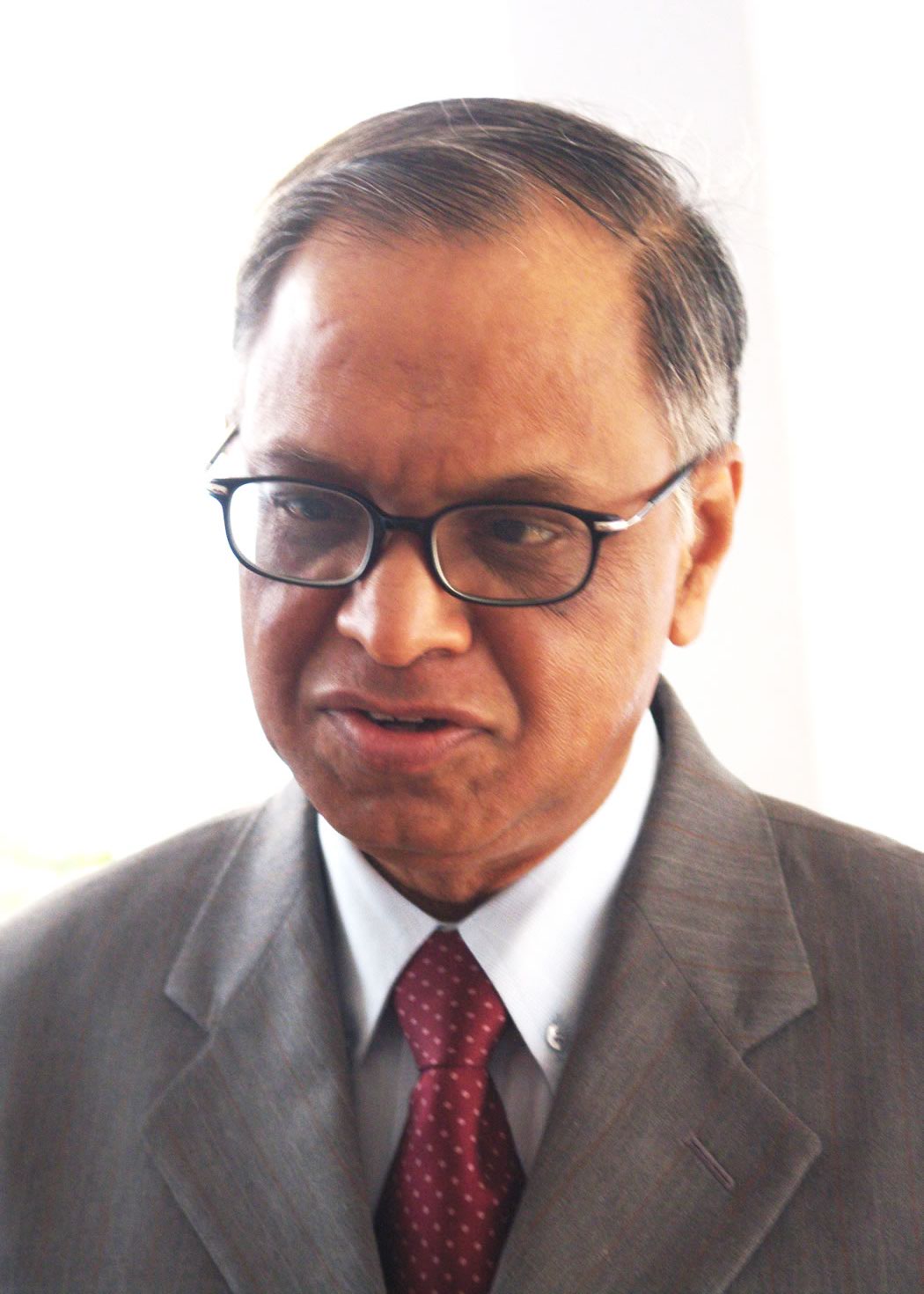
Dear Mr. Narayana Murthy,

0 comments
Dear Narayana Murthy,

Because of Infosys, your son and yourself, my wife and I had a very intense yet stimulating debate two days back. The evening which we could have spent watching some matches at Roland Garros on TV, we spent discussing your coming back into Infosys with your son. 

She was upset that I wrote negatively about Infosys and you on Facebook. She said that I was very harsh on both. She feels leadership is not emotionless decisions but one which is about people, hence very emotional. I agreed and disagreed. 

Let me cut the chase and go to what I think . 

  1. HR at Infosys has failed big time. Shame on them!  
  2. Infosys is not a "professional" organization.  

People are saying that you are to do another Steve Jobs. Even if you do, then? Poor Tim Cook is still suffering from Steve's ghost. 

I have a question for you, and to your HR. Would you bring back any other retired employee? Say, a Project Manager, Coder or an Admin Manager? Why have you been given special treatment? Don't you have a retirement policy?

Next point to ponder. 

If Congress decides to make Rahul Gandhi the PM candidate, I wouldn't be surprised. 

If Ambani brothers decide to make their children head of their respective groups, I wouldn't be surprised. 

Or for that matter your competitor Azim Premji would not surprise me if he follows the family traditions. 

But, not Infosys! Why did you have to bring your son into Infosys? Couldn't you find anyone else who could have done that job? And what is this Re. 1 salary stunt? What are you trying to prove? 

Your HR policies were something that other organizations would have wanted to emulate. But I think behind those great places to work atmosphere, your succession policy failed big time. 

The biggest mistake you and other founders did, in my opinion, is the want to be CEO of the organization by rotation. Why? Just because you are founders, all of you need to take a stab at the position? All of you wanted your names get etched into history books? It seemed like a merry-go-round. 

With you and your son in the organization and this merry-go-round, it feels Infosys today is a hybrid variety of Family-cum-Friends organization. A unique breed! To be proud of or not, I am not a judge. But Infosys, I knew, wasn't supposed to be that way. 

All the best in your old role. Hope there is a quick and sure turnaround. And maybe by then your HR will also have a good time to work on a succession plan. Could be Rohan, never know!

Love and regards,

Ganesh

Friday, September 17, 2010

Business and Driving

0 comments
Earlier, I had posted about how we make strategic decisions when we chose a route to reach a destination. A cheap(er) imitation from Thinking Strategically, a brilliant book on Game Theory by Avinash K. Dixit and Barry J. Nalebuff.

A look at my car would reveal to anyone that I have been rather impatient in my driving. The reasons could also be that I have not honed my skills. But many a times, it would just not be my fault. The road is full of morons. So, about a couple of months back, I decided not to get too competitive on the road. I realized that my goal is not to be first, it is to reach the destination safely without causing any harm to self, my co-riders and anyone else on the road. I also decided to stick to reasonable speed limit. I observed that in city it doesn't matter how hard you press the accelerator, you will certainly pull the brakes on red signals every few meters. Most importantly, you just don't gain time.

But coming back, there's certainly a lot of commonalities between driving and businesses.

  1. Availability of resources is limited: While in business it could be raw material, people, partners...the most important limitations in driving is the road. Whether you drive an inexpensive hatchback or an expensive limo, there is only that much tarr-ed surface. Demand is so high that any additional supply is usurped, quickly.

  2. Highly regulated: If the Company's Act is the bedrock for organizations and establishments, the most essential barrier to entry on the roads is the license. And just like businesses, you get a different license based on the market you want to drive it - two wheeler, four wheeler, heavy vehicles...
  3. Competition: Companies can be categorized based on their size. Similarly, one's presence on the road is measured by the vehicle driven. While larger presence has an impact, there is enough room in the markets and road to allow everyone to exist. But then everyone is fighting for a space and to reach faster. While drivers may not have the same common goal like companies in reaching out to same target audience, the common element is the direction. In that sense, racing and businesses are more similar.
  4. Strategy: Both driver and an organization has a fixed strategy, but make suitable changes based on the situation.  

So next time you drive, think you are conducting a business. A serious one. And if you are one of those who need to deal with road rage, here is a wonderful read. Helps!

Wednesday, June 16, 2010

Game Theory: Harrington Road to Pattulos Road

0 comments

It is only about 5 kilometers from my residence to office. But the number of ways (routes and not modes) exceeds that number. A small reflection on the routes that I could take reminded me of a chapter from Thinking Strategically by Avinash K Dixit and Barry J. Nalebuff. 

Now in addition to Geoffrey A Moore's collection of Crossing the Chasm, The Gorilla Game and Inside the Tornado, if there is one book that I really relished is Thinking Strategically. So here, I have tried to recreate, taking a cue from the book, my options. 

Route 1: Harrington Rd-Spurtank Rd-Casa Major Rd-Pantheon Rd-Rukmini Lakshmipathi Rd-Binni Rd-Mount Rd-Pattulos Rd.

Route 2: Harrington Rd-McNicholas Rd-Under Chetpet Bridge-Valluvar Kottam Rd-College Rd-small bridge on left-Ethiraj Salai-Binni Rd and then like Route 1

Route 3: Till College Rd like Route 2-Greams Rd-Mount Rd-Right on Sathyam Theatre signal-Whites Rd-Smith Rd (that is parallel to Pattulos Rd and takes me to office)

Route 4: Till College Rd like Route 2-Sterling Rd-Nungambakkam High Rd-Gemini-Mount Rd-Sathyam Theater signal-then like Route 3

Now there are two mini diversions which I can make in Route 1 and Route 3 that can create variations. Now I can also, if I want to, create further more variations. Complexity can be added to the options by introducing the modes. Like I could think about going by a bicycle or an auto or a combination of walking and share auto. Thankfully, I have decided to ply by my car, only.

Game Theory is about creating different options and the figuring out which one is the most suitable to you. Please note, 'most suitable'. For example, for me the most suitable of the above routes to office is not the one which is the shortest and not even fastest. For me, the drive to office should be quick and hassle-free. Now here is what I consider before taking a particular route:

  1. Which route has the least signal? Even if a particular route is short does not mean that it is fastest. It would be better to drive a longer route with no signals than one in which I would get stuck on signals for a long periods.
  2. What day is it? If I work on a Saturday, I rather take the shortest route, because on the weekend, it also turns out to be the fastest.
  3. Traffic load: While Route 3 might have the least amount of signals, the pile up at the point where it joins Mount Road creates a huge bottleneck.
Now there was this discussion other day during a session organized by Social Media Club, Chennai, about what is a strategy and what is a tactic. In between there was a confusion over strategy and objective.

So in my route-dilemma, what is the objective, what is the strategy and what is the tactic?

In my opinion, reaching office in the quickest (not shortest and fastest) and hassle free way is my objective. And the routes, I have enlisted above, are the strategies/options that I have. And tactic is my choice to change routes based on certain situation that may arise. My choice to take Route 2 instead of usual Route 1 on Saturdays is one such tactic. And as Naru had once explained, tactic should not be considered insignificant.  Even a tactical move can be strategic!

For those who intend to understand more about strategy, tactics and game theory, please order a copy of the book. While I try to figure out why, despite taking the best route possible, I get late!

Monday, April 13, 2009

Internet Strategy for Indian Politicians

0 comments


The second most populous nation in the world, India, has a human stock of 1.2 billion people. India also happens to be the world’s largest democracy and the Indian Parliamentary Elections due this April-May will probably be the biggest electoral event in the history.

About 700 million citizens will be eligible to exercise their franchise. 500+ seats, thousands and thousands of aspirants, numerous parties huddles loosely (or tightly) into three (oh no, four. Never mind) fronts. Across the length and breadth of the nation, accommodating almost all terrain possible on planet Earth.

Welcome to the World’s Largest Democratic process!

Despite being a developing country, India takes pride in use of technology in this gargantuan process. Not many developed countries can claim to be as savvy as India is.

What really caught my attention this time was the use of technology by political parties to position themselves as the party of choice. In this case, I am more interested in parties using the Internet. I have seen BJP’s LK Advani on Orkut. My colleague Sonia (not Gandhi) informed me that Congress’ Sonia (this time Gandhi), Rahul, and Manmohan Singh stare you from banners in various website.

Quite surprising! At least, I am surprised.

Why would political parties use the Internet to propagate themselves? The penetration of internet is so low that, in my opinion, it is neither effective nor efficient medium. Internet is medium for the crème-de-la-crème and this number is likely to be miniscule. And most importantly, it is as fragmented as any other medium available.

Let us ponder over the voter base and the reach of different media. We may be able to arrive at a good media strategy for the politicians of country then.

As I had mentioned the voter base of India is around 700 million (meaning people over the age of 18). According to IAMAI, there are about 45 million internet users. We will consider this base 800 million in this article. This is for ease as the IRS studies has taken 12+ population as the sample for its studies on media and Internet as a medium.

According to this report in IAMAI, the number of people who use Internet in India is 45 million. Of the 800 million population, the number of people in the urban and rural India is approximately 250 million and 550 million, respectively. While urban India is savvier, which is no brainer, the Internet penetration in rural India, which is “where India lives”, is abysmally low. In terms of percentages, the total Internet penetration is approximately 6%. Rural India is in decimal figures.


In a stark contrast is the extent of penetration achieved by other media. TV tops at 467 million, publications comes second at 323 million and radio, with its emergence, stands at 180 million.

Some of the leading TV channels, publications and even radio channels can put total Internet penetration figures to shame. Some figures have been provided in this article for you to refer.

So, why are our politicians from the Left, Right and Centre so visible on the IT horizon? Just a small digression, as I write this article, Samjawadi Party has released its manifesto and if I have to believe news reports have decided to shun machines for men.

The problem with media in India is that it is highly fragmented. Primarily, India states have been divided based by the lingua franca spoken in that particular region. For example, Tamil Nadu is inhabited by people who speak Tamil, Andhra by Telugu, Karnataka by Kannada and so on. Each state government over the years has done well in promoting the local culture and language. The role played by local language (or vernacular) medium has to be commended. It will be worthwhile to mention here that according to a study, the number of English speaking populace is only a meager 90 million (maybe it is not meager but the point is that local language prevails). Consider this, Tamil Nadu state has 60 million Tamil (a language which was spoken even before the advent of Sanskrit). Population of Uttar Pradesh (UP), the most populous state in India, is 100 million. The language predominantly spoken in UP and in most part of the heartland is Hindi. Bottom-line, similar to the penetration of Internet, English, Internet’s (un)official language, is pathetically low.


Two, the Indian media is segmented, as it would be anywhere else in the world, based on the content it delivers. General Entertainment channels – Hindi, English, and regional languages, News channels – Hindi, English, and regional languages, Infotainment and Music – channels are primarily English though there are many local language Music channels, Movie – English and Hindi primarily, though regional channels do exist. Internet is also fragmented though the primary use of Internet in India is Mail (91%), Search (76%), Education Information Search (49%) and Text Chat (46%).

And finally, the segmentation based on Socio-Economic classification (SEC). The digital divide is total in India. We have seen that the penetration of Internet in rural India is paltry. Even in urban India where 43 million have access to Internet, the penetration cannot be claimed to be substantial (around 5%). It is no brainer that computer and Internet is used more in the SEC A1/2 section of the society. That again is not big number. Also, I do not think that this section is a large enough vote bank for anyone.


So why? Why Internet? Why are these politicians sprinkling/putting (not betting) their money on banners and ad words? How do they exactly plan to capture votes and imagination of the masses?

As Sonia, my colleague and a strong supporter of the Internet strategy for politicians put it, “it is not for masses but classes. Politicians are trying to reach out to thinkers and opinion shapers.”


Valid point!!! Or is it?

This article is dedicated to Manoj, who commented after reading my piece on differentiation for James Bond, that my thoughts are too frivolous and devoid of any facts or figures. So, Manoj here it goes. I have tried to put as many figures and tried to make this look like a research piece. Thought most is secondary data but relevant.

This article would not have been possible without the help of my very able colleagues who did the research on my behalf. Thanks Sonia, Durai and Rashmi.

If you are interested to read more on Internet in India, please visit http://www.iamai.in/reports1.aspx