Showing posts with label Social Media. Show all posts

Sunday, December 22, 2013

Social Media and Customer Service: Part 1

0 comments
Before I begin, on a very different note, please avoid any of the private bus operators if you want to travel between Mumbai and Pune or vice versa. Shivneri buses operated by the Government are very efficient. 

Coming back to what made me pen this post; my very own experience of social media 's power in bringing a corporate "down to its knees" and make it listen to a disgruntled customer. More importantly, today organizations seem more worried a cure rather than prevention. Cure here would mean that organizations are willing to act upon escalation of complaints on social media rather than building robust customer service organization and processes that can prevent escalation on social media. 

Recently, I had to travel from Pune to Mumbai, from where I was to board a train to Surat. I used redBus.in to book my ticket. Before booking I went through the Terms of Use. Do read, could be useful if you intend to use redBus to book tickets.

So, on the designated day I reached Purple Metrolinks boarding point opposite to the Pune Bus Stand on Station Road. The bus was supposed to leave at 5.30 am. I reached the stop well in advance. I waited. At around 5.40 am an outlet next to where I was supposed to board the bus opened. As I approached the outlet, I realized that it was Neeta Travels' dealer and not Purple's. I resumed my waiting there. The arms of the clock seem to be ticking faster, then. My train was at 11 am from Bandra Terminus. And I knew that it takes a minimum of four hours on the private buses and was worried that I might miss my train.

Then it became 6 and then 6.15. I started getting restless and checked with the Neeta Travel's operator. He said that Purple's service was bad and the buses were cancelled often and they were always late. I made frantic calls to Purple office and no one picked. Finally, I picked up a ticket with Neeta and left Pune at 6.40. At around 7, I got a call from someone at Purple asking me where I was! Not keen to have a conversation I just told the guy that I left by Neeta and cut the call.

Immediately, I also mailed redBus.in narrating the story that you have been painstakingly reading so far and sought a refund. That was about two months back. And then the waiting game started again, this time with redBus.

After many mail exchanges, numerous calls and waiting for about two months, I realized that if I didn't escalate the issue to higher ups, I will probably never get a refund. While I used LinkedIn to connect to the officials of the organization, I also went to Facebook and Twitter. Usually I would avoid bashing anyone on social media. I don't think that is a good practice. I would prefer using these social media forums only if I have exhausted all other channels of redressal. Two months of waiting and no response meant it was time. I left a harsh note about the customer service and their refund process on both forums.

Voila! Within an hour, I got a call, a mail and couple of messages on the forums asking for details. Two hours later refund was done. Followed by confirmation calls and a mail. And a request if I could remove my social media bashing!

As a customer, I was happy. As a marketer, saddened. While organizations are taking social media appearances and image seriously, are they missing out something?

To be continued.

Monday, June 3, 2013

When Ads Speak The Truth

0 comments
Kudika vendam, appadiye sapiduven! 

Translates to I don't want to drink, I will eat it. That was the legendary line from Horlicks' ad.  

For a matter of fact, I myself preferred eating Horlicks as a kid rather than drink. I am sure many of my generation also used to do the same. It was more delicious that way. And the ad was not far from the truth. Not many ads can boast of capturing the true essence of what the product or service does? 

Last week, Indiblogger organized a bloggers meet in Chennai - The Ambi Pur Experience (). Though my blog is listed on Indiblogger, I have never been to any of their previous blogger meets, despite wanting to. Sabbatical and a nudge from a good friend, I found myself at the meet.


How many remember the Ambi Pur ad? It is a blind test conducted where people are made to sit in a car and share their experience about the perfume and how they felt. What the participants don't realize is that they are sitting amidst a mini garbage dump set up in the car. They are shocked to find that despite such filth the car smells fresh and nice.

If you own a car you know how cars can become smelly and unbearable to drive. My search for a good car perfume has never been successful. There are so many brands, some known and otherwise. I have tried few, including the previous Ambi Pur model. But never been satisfied with their performances. After sometime, one just doesn't feel the perfume.

The blogger meet replicated the blind test ad for the bloggers, more than 200 of them that day. I was eager to experience the brand promise. And I must say I was sweetly surprised to find the ad true. The car was filled with bad odor emanating sources like a shoe, plates with stale food...but the car smelt fresh. Later on a representative from P&G explained how the company had not only worked on the formula of product for great experience every time you use it but also how the design of the product has been changed to make it more effective.

I came back from the meet after collecting the complimentary pack of Ambi Pur Sky Breeze, one of the five variants available.

But then I prefer only camphor to keep my car fresh, nowadays, and didn't want to change that. But that Ambi Pur was so effective, I fitted it into the window AC in my bedroom, as suggested by the P&G representative.

I was not sure if the Ambi Pur would be effective considering the room is much larger than the size of a car. But then I switched on the AC and the result was instant. The room was smelling great. In fact it remained so for quite a while even after I switched off the AC.

Planning to try other fragrances.

Thanks to the blogger meet, as a customer I found a good product that delivers on the promise and as a marketer an ad that captured what the product delivers.

Tuesday, April 30, 2013

Communicating in Social Media

0 comments
 
Those in the communications industry know that there are two forms of communicating - one-to-one and one-to-many. As the terms indicate, one may want to converse with only one person at a given point of time or with more than one at the same time. Basically it is about impact and relevance.

Till about a couple of months back almost anything that I posted on Facebook was one-to-many. Be it some story from the net or photographs from holidays. This despite that I have created a variety of lists categorizing friends.

Savitha on the other hand is more discrete. Her sister is far more conservative and prefers not posting photos on Facebook. She and her husband prefer to share pictures only with family through mails or Picasa. In fact, my sister-in-law observed that the practice of publishing huge albums, detailing the action in respective lives, on Facebook was more Indian behaviour. Hard to say if that is true, but does seem to be.

After that I did practice restraint, but the narcissism got the better of me. And after a recent holiday I posted photos on Facebook, for everyone too see. I must say, the number of likes is directly proportional to the feel good factor.

Photos are still tolerable.

What really amuses me is a spouse wishing the partner on birthday or anniversary on Facebook. "Happy birthday, husband (or wife, as the case maybe). Or "I miss you". Recently someone added pictures and details of the shradh for their deceased family member. There was this one occasion where a lady on Twitter spoke about the state of her undergarment during her menstruation.

I wonder if these people would do that in real world, especially in public. I am sure they won't. But social media somehow removes inhibitions. 

How do you wish a friend on his or her birthday? Call, SMS or on Facebook? If on Facebook, do you send a private message or write on the wall. A look at my wall on birthday tells me that people prefer the wall to a private message. Nothing wrong but why wall and not a private message, I wonder. Should be convenience.

I do not have to emphasize the need for exercising caution while communicating on Social Media. It is surprising that while we are agitated by the privacy settings of some social media sites, we ourselves do not practice discretion while we converse.

Here is a model that we could use while communicating in social media. It is based on personal experiences, observation and logic.

Before communicating, consider whether you want to communicate to an individual or a group. Though the group could be anything from a crowd to a close knit group. The message could be a personal. For example, say health records or bank details/passwords. Even things like I love you or my pantie is stained kind of information. Or message could be non-personal like news, jokes, trivia or any information in the public domain.
 
Based on this, you may want to:
 
  1. Whisper: If it is a personal message, please keep it strictly one-to-one. Use tools that will preserve the piracy.   
  2. Relay: Even if there is nothing personal about it, it is better to be one-to-one. While using any tool shouldn't cause any harm. Would still prefer that one uses an email or private message rather than a social media.
  3. Hidden truths: Imagine a secret society. The membership and communication is strictly controlled. Secret society or a close knit group, open communication with outer world is strictly avoided.
  4. Loudspeaker: Tweet or share in public. It's information, for the public. 
Some mediums provide only one-to-one communication while others provide multiple options. The choice of communication tool has to decided based on the audience and the relevance. Having said that it is a personal choice of what to communicate and how to communicate. For others, there is a model here. 
 
How much this thought is going to be relevant to people on Facebook, I am not sure.

Sunday, April 3, 2011

Don't Take Social Media Seriously!

0 comments
I do mean it. Companies should not take social media all that seriously!

Have I lost it? Just a couple of months back, I wrote that social media makes a great impact on the image of a company and consumers can make themselves heard quicker and be assured that they'll be responded to.

So, what has changed? Nothing. Social media continues to enjoy its status of the most powerful 'CRM' tool, today. Not only has it made companies listen to customers and respond to them faster, but it has impacted them on issues which could rather be classified as not in the 'public' domain. It has made GAP and Tropicana revert to their earlier brand avataars. Brands, really great ones, buckling under virtual pressure.

And I say nonsense!

First of all, despite being an MBA with specialization in Marketing and having worked in Communications industry for more than 10 years, I haven't quite figured out why does a logo need to be changed! Of course, many reasons are given, some meaningful while others shallow. More importantly, do companies imagine that they can change the market scenario just by changing their brand identity?

Abraham Chacko, my ex-colleague and friend, during our discussion on Airtel's new identity said that the company could have used the money more effectively by innovating and offering services to attract new customers and retain its existing base. Quite a valid point! Remember good packaging doesn't necessarily mean good product.

What it could have done is a different story. What it has done and how it will affect its position is to be seen. But what I do appreciate is that Airtel didn't buckle under the severe criticism that followed after it unveiled its new identity, unlike the others.

There's a story about the architect of the legendary Taj Mahal Hotel. Apparently, he threw himself overboard  because he found that though the hotel was built as per his design, the directions were changed! Not sure if the story is true, but am sure designers of GAP and Tropicana certainly would have felt more miserable.

Companies/Brands are taking social media far too seriously for their own good. You show disrespect not only to the consultant who (probably) has the right credential but also to your own self. Remember social media is just a part of the entire universe of customer audience for you. And most of the time, these social media netizens don't have the right credentials.


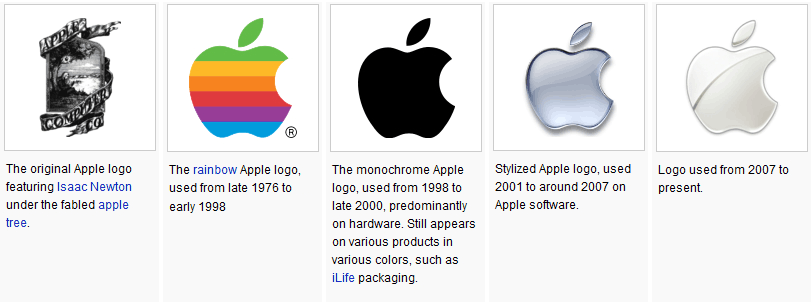
I am sure many of you would have heard the story about how Steve Jobs decided upon Apple as the brand name and how the logo came about. Can you imagine what the 'brand gurus' in social media would have said? 

Thank god, Steve Jobs didn't have to face 'experts' in social media.

Thursday, November 25, 2010

Facebook eMail: Evolution or Revolution

0 comments
It was in 1998 during my post-graduation that I opened my first email account with Hotmail.com. That was also the first time I had ever experienced Internet. My excitement soon turned into great depression.What was the point in having an email id when I didn't have anyone to mail to!

People who had an email id were all my classmates whom I met everyday. I was communicating with them daily. Even if I wanted to write an email what would I write?

Slowly, things changed. I found people whom I could mail. But the real use of email started only when I got into a job. Then, I opened a new account. Again it was a Hotmail id. Little later, I moved to Yahoo! Now, those days Yahoo! was very popular because one could also chat. Yahoo! Chat Room was a great place if you wanted to find a date. I tell you, they were a craze! 

Interestingly, now I had two ids each with Hotmail and Yahoo!.

See how beautifully the economic principles work. During the early 2000, there were far too many email service providers. And when there is too much of supply, the customer always has an advantage. There was this benevolent email service provider called - chequemail. No not check-mail, it's cheque-mail. Now, this service provider wanted to share the money made in advertising with its subscriber base. Wow! Yes, I did jump. Voila, I did receive a cheque for Rs. 50, once. Then? Then the service provider closed down, much to my disappointment. Good things don't last too long, pretty much like the romance in marriage!

Then, I changed to USA.Net. I liked it. But as luck would have it, that too closed. Actually, the free service closed. That was the indication of the dot com burst, maybe. Reluctantly, I reverted to Hotmail and Yahoo! Of course, I should mention that intermittently I also tried various other service providers, too. I can't figure out the rational but that's what it was. 

And then Gmail happened. Google as a brand had become very desirable. With a tactic of invite-only launch, Google further heightened the desire value. I remember begging for an invite from couple of gatekeepers. Actually, Gmail from usage and aesthetics perspective is nowhere close to the others. But then the charm and desire was high. In fact, Gmail didn't even have a chat software at the time of launch. Now, that is the brand pull.

Today, an email id is not only your key to mails and chat, it also gives you access to other services that service provider may have. One id with Google is good for you to access Blog, Orkut, Calendar, Reader, Finance...

Now, here comes Facebook with email service. Except for the fact that it talks of a concept of getting all communication that we do confluence at one point, I didn't understand much. It is proclaimed that it would change the way we communicate. I guess usage may change my opinion, but for now it looks hazy. But then when I was reading about Facebook's move, I somehow was reminded about Google Wave! Not sure why, but that is how it felt. While Wave itself failed, I do think if marketed and packaged well, Wave could be the next Official Communication tool. In fact, it could be the future of Social Networks!

One of the reasons why Wave probably failed was because it was duplicating what Gmail was already offering. Wave was chat and email mixed at the very core. It, in fact, could have been the true Gmail-killer. But then it was a separate offering requiring a separate id and log-in. It certainly was a pain using it. But can you imagine if your current Gmail behaved like Wave! I certainly would have loved it.

That leads me to important email behavior. We have and probably will continue to have two sets of email communications - personal and professional. I am already panicking. Most offices block Facebook, in which case I may find it more difficult to access personal mails. But that leads me to wonder whether convergence of email with social network is necessary? Conceptually, it feels as if it would make life easy. No need to log in into more than one window. But then, in the technology world there are two distinct factors to be considered:
  1. Technologies that enable change
  2. Consumers move or remain inert (Wave being a classic example of consumer inertia) 
Going by my own behavior, while I do use the messaging tool in Facebook, it is not my primary or for that matter preferred email service. But as Master Oogway in Kung Fu Panda says future is a mystery. Honestly, I don't think Ray Tomlinson would not have fathomed how email would grow and become an integral part of our lives. Then, who am I to risk a guess? But I do think Google had or still has a chance to revolutionize email while Facebook is evolutionizing Social Networks.

Wednesday, November 17, 2010

No Money Marketing, From the Horse's Mouth

0 comments
I have been always been in awe of Nikhila Kesavan. In addition to being one of the most talented theater personalities in Chennai and probably in India, she is also a successful PR professional and an ex-colleague. Nikhila is a perfectionist. Despite the fact that she was my junior, I would get jitters every time she reviewed a document that I created. She would rip it apart, highlight how pathetic my grammar was and how poor my sentence formations were. The other person who scares me equally is my wife. I am beginning to firmly believe that grammar is a girl-thing!

Back then, Nikhila and I were servicing Lason India, a leading BPO player in Chennai/India. They had a network of business associates, an innovative operations model. We were briefed that the business associate model had been taken to the next level and that Lason had set up what was probably the first BPO center in a village! Rural BPO! Though I initially suggested that we do a small press brief in Chennai, I changed it to a press junket to the obscure village in Thiruvallur District, at the last minute.

Being the person she was, Nikhila swelled with anger. She had already started working on the press meet in Chennai and now she had to start from scratch to organize the logistics for a larger event. But more importantly she was upset that we were not sticking to the initial plan. She demanded to know why the plan was being changed. And I didn't have an answer. It was a gut feel.

Thankfully, the event was a big success.

I couldn't articulate why I changed the plan. It was certainly based on the experience and understanding of what would or wouldn't work. 

Now that leads us to No Money Marketing by Jessie Paul. A veteran marketing professional who has worked with the leading software services companies in India (Infosys and Wipro) and played an important role in building the brand that they are today, she has no such articulation issues.

Also, I realize that there are two kinds of writers/authors. One who are academicians who research and look at the big picture. They give guidance with their theories and support it with observations. And then, there are those like Jessie who are doer-authors. No Money Marketing is like a ready reckoner. Read it, roll up your sleeves and get to work. The book is unpretentious and doesn't test your patience by giving models that are great to read but difficult to utilize. But it does have models that can be easily digested and provides a great framework to develop marketing campaigns. There are nuggets of wisdom which provide excellent cue to marketers who always work on a diet-budget.

This book is a must read for marketing professionals in the technology industry, especially those in the software services space. The challenge for players in this space is that most of them are Me-Too. Last time I checked the Nasscom member's list in 2007, there were more than 1000 software services company. The glory story is limited to the top 50 or 100. For the rest in that list, it is a tall order.

I liked two lessons, in particular:

  1. As I said, Jessie is a doer-author. This book is full of practical inputs for a marketer who wants quick solutions. But what is more important is that before she presents the ideas, she sets the context. First few chapters are dedicated completely for self assessment. While the tools and ideas are common, Jessie urges every company to self introspect and develop a strong unique story. She in fact provides many examples and thoughts on how it could be done.  
  2. The avenues for brand building. The chapter on Core Branding versus Surround Branding is very important. For many software services company India is not a market but they certainly do lot of brand building activities, here. While it may not directly bring in business but it does help in recruiting and retaining the talent. And of course, in a flat world, a term you will find Jessie has used just too often in the book, there is always a spillover.
As a professional who has practiced a few of the ideas and other times observed being practiced, I think this book is the ultimate guide for marketers in software services industry. A book that CEO of every software services company, especially the small and medium sized who do not have a differentiated offering and work on frugal budgets, must read. And if you need more help, there is always Paul Writer.

Sunday, October 31, 2010

Media Wastage or Halo Effect!

0 comments
Taking a brief is an integral part of a client servicing executive's life. I still remember, two questions that I always threw at a prospect or client were:

  1. Who is your customer?
  2. Who is your competitor?
Thinking about it, I don't think I will ask such fundamental questions, today. But that is not the point. If I was kiddish, I have got juvenile answers, too. The standard response in those days were:

  1. Everyone.
  2. No one.
Oh my, I would be so impressed with those inputs and scribble them down, mindlessly, on my note pad.

Couple of weeks back, Volkswagen (VW) created quite a buzz, in the real and virtual world, by publishing a talking ad for its to-be-launched Vento, in The Hindu and Times of India. One may find many faults. The sound was not clear, it didn't have a micro-site address...but the point is that certainly it met its objective. It managed to create Awareness, Interest and, if not much of, Desire

A few months back, I visited one of the PR agencies that handled VW account. During the discussions, I asked a young bright executive who was on the account whether Polo launch ad was a good. VW had done a newspaper with a hole ad, then. I went on to give the usual spiel that though Times of India was the largest publication, it certainly was not omnipresent and that the media in India is highly fragmented. I further suggested that VW could have considered conducting/sponsoring a major event which would have been inexpensive and managed coverage across all publications.

The young man told me that the Polo ad has created a lot of buzz. I, mentally, dismissed him, but now acknowledge it. And, this time, the Vento ad takes the print ads to another level.

In 2001, after a press meet, Srinivas, a journalist with Digital Age (a technology focused magazine from a splinter group of Express Publication) introduced me to a term which has since then become etched in my memory. He said that the future is for specialist publications. He went on to say that there was an enormous amount of media wastage. Just out of college and still in a soaking up mode, I loved the term. 

Little after that, Digital Age closed down. But I remain fascinated with the idea. Srinivas said that the general dailies were overrated. For a marketer they are such a waste. Logically, if someone wanted to buy a product or service, one would look into a specialist publication. After all, mainlines are, mass media. 

It does make sense at some level. There is no disputing that the prospective buyers of Vento and, certainly, Polo would be covered by Times of India and The Hindu. But are all the readers in the consideration set? 

Polo and Vento are different cars, targeted towards different audience. Their price points are different. Was there an option for VW? Would it make more sense to have advertised for Vento in a business magazine rather than a daily? I have wondered why car brands didn't (now, few do) advertise on Financial dailies? Wouldn't that have been a far more focused approach? 

But I guess these two ads are just launch strategy. The idea was to create a buzz with the topmost media to put in their creative. Exclusivity was the underlining factor. Create the Halo effect!

I am wondering to myself if the concept of media wastage is a waste. If segmentation can be used to be more impactful in communication considering that media options are quite diverse. Or is halo effect more important than wastage?

Marketer's Dilemma!

Monday, September 13, 2010

Employees In The Era Of Social Media

0 comments
Till such a time that we discussed and gossiped in the real world, it was fine. 

Then somewhere Web 2.0 happened. All of us, who were till then laymen and consumed content, were vested with extraordinary powers to create and distribute content with far-reaching impact. It has become a strange world, since then. Free-speech has assumed new proportions.

Couple of days back, I had this conversation with a friend who works for one of the largest IT Consulting companies in the world. He told me that as part of the recruitment process, the company does scan the blogs of applicants. Now considering that I intend to be a salaried employee with no interest in the entrepreneur-adventure, does my virtual verbal diarrhea have any repercussions for my career? Considering that it is easy to be watched and tracked, does my online outbursts hurt my chances?  

I have made some positive mentions about one of my ex-employers. But completely avoid writing anything negative about any of my employer, present and past. And, clients are absolute no-no. So much so, I usually think twice before writing anything negative about a brand. 

Call me a coward, if you want, but am rather very apprehensive about being very vocal on Internet.

Earlier, I had written about Customer Service in Social Media Era. The reason for social media becoming spitting bag is that it is easy for individuals to do so. Now, who wants to go to a website and fill out forms or call a 10 digit number, only to press a few more. But more importantly, social media has become top priority  within the Customer Interaction Management industry.

I had this conversation with an extreme social (new) media enthusiast. He felt that it is absolutely fine with someone expressing his views in the public space. If I recall correct, he said that every individual is also a consumer. And that one should share their experiences with brands so that others can make an informed decision. Quite valid, I think.

It was widely reported that an employee was asked to leave after he made some reference to an institution in a blog. The employee and the employer both denied that the separation had to do anything with the post. In another case, an employee in a client servicing industry tweeted with negative reference to an organization because its staff bus was being driven rashly. While, his employer and the organization didn't have a relationship in India, they were working together globally. There was no damage in this case, thought it did ruffle some feathers and left a bad taste, I heard.
So, what is the desired behavior? Should companies monitor an employee's online avatar? Can social media acts of employees be considered exclusive of his work area behavior?  

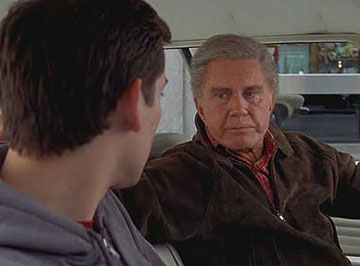
As I mull over these points, I am reminded of this profound quote from the blockbuster Spiderman about power and responsibility. I still remain confused.

Many companies, today, have evolved behavioural guidelines for employees. While I have not seen one, myself, I think it would certainly be drafted in such a way that it covers any liability arising due to employees' net act. On a side note, have you read any Sexual Harassment policy? Gives me jitters!

And, oh yes, Shashi Tharoor and Lalit Modi will go down in the history for being two people who lost their jobs due to Twitter, whether directly or indirectly. Now, I am mighty scared.

Tuesday, July 13, 2010

The Fall of Advertising & PR, And Rise of Social Media

0 comments
Cliched!

As much as it was when people used to say The Fall of Advertising & The Rise of PR. I remember, when I was doing my MBA, the advertising lecturer had mentioned that the advertising industry in India was worth INR 8000 Cr, that was 1999. Today, after the emergence of PR as another communication tool and predictions of its imminent death, the ad industry is supposed to be worth INR 40000 Cr! Did somebody say fall?

Does that mean PR has failed? No, in fact in the last 10 years (that is the time that I have been in the industry) PR has grown and matured. It is now acknowledged as an important and strategic communication tool. It hasn't killed advertising, though. Both co-exist. Initially, advertising was like the big brother of PR. In the early days, companies who advertised thought editorial coverage was their birth right. Difficult days! But the PR industry has grown from strength to strength. So has the understanding about PR amongst the client community.

Then, can we, with the emergence of social media, though still very nascent, make an aggressive hypothesis - The fall of Advertising & PR and The rise of Social Media?


Here Comes Everybody: The Power of Organizing Without OrganizationsConsider this. Clay Shirky in his book Here Comes Everybody has illustrated the emergence of technology and its detrimental effect on the existing industries and practices. The most relevant to this topic is the story of lithographers. Lithographer were in huge demand till the invention of printing press. The lithographers' role was erased, in a manner of speaking, the same way as the ink dissolves in water. In the short time that I had spent in the advertising industry, I have many times run to the newspapers with the 'positives' (looked more like negatives). Today, it's digitized. Disruptive technologies have had telling affect on industries.  

Search for it and you will find numerous reports on the decline in the popularity of newspaper. Of course, the link is more specific to US. In India and developing countries, it might be better. To quote Shirky's work, it is because Web 2.0 has made anyone with access to Internet a publisher. With the power to publish, the world has become, what I am tempted to call, Journalists' Paradise or should I say hell. Just like lithographers, it is often quoted that the breed of journalist (who hold exclusive right to publish) will die. Sounds logical. With democratization of journalism, it doesn't sound incredulous. On a side note, a trained calligraphist who is changing the way technology industry works is Steve Jobs!

What about other media? TV and Radio?

Before we move on let's consider some fundamentals:

  1. Human beings will continue to seek information
  2. Human beings will continue to seek entertainment
Now, what is communication about?

  1. Sender
  2. Receiver
  3. Medium
Elementary, wasn't it? But useful to consider what will be the future of the communication tools like advertising and PR, because they are about medium. Internet is also nothing but a medium, pretty much like TV, Print and Radio. Social Media, growing at a rapid pace, presents a new opportunity rather than problem. Today, both traditional advertising & PR and specialist individuals and agencies are cannibalizing this medium with their services. 

The problem is rather for media organizations. 

Future of media is likely to change dramatically. If YouTube is the way we will watch videos then how will the advertising model work. Look at IPL on YouTube for that matter. Internet telecast of events might offer advertisers the power to 'actually' customize their ads. Unlike the regular TV where one ad fits all, will TV through Internet offer the same flexibility as it does on PC. Also, if the TV software is made available on 'cloud' where a viewer can watch programs as and when he wants to, how will advertising work? How will the content be consumed? 

As for print is concerned, things are pretty much clear. Things have already changed. The problem that the print industry will face is the explosion of self styled journalists. But think about it, as consumers of entertainment and information we are very simple beings. Further, we also are emotional creatures becoming loyal and sentimental. Most often our choices narrow down to couple of options. The dust is likely to settle, there will be consolidation. 

What would be interesting to watch going forward is the future of social media consultancies? Would they become a special breed and a full fledged industry? Or will PR and Advertising industry master the new medium?

Saturday, June 26, 2010

Why Does Twitter or Blog Work? Curious Case of Customer Service

0 comments
I love my Maruti Swift. I loved my Maruti Alto, earlier. I have been thinking of buying a bigger car, for sometime now. Chevrolet (please don't read it as Chevvy, GM doesn't like it) Aveo, Tata Manza and Fiat Linea to my liking, I have been treading cautiously over the thought. The financial condition is not in the pink of health to accelarate.

But then I know that car buying is a one-year process, so why not test drive! Over the last five months, I have called up couple of dealers in Chennai for a test drive. Surprisingly, I would get a call from these dealers for a time and date, but that's about it. At least on two weekends after complete assurance, I was left 'on-the-road'. I tweeted about it, last week, saying Fiat and Tata are probably overbooked and that is why they are not keen on offering me a test drive.


Tata Manza which has a presence in Twitter, immediately messaged asking me for my contact details. No later, I received a call from the same dealer whom I had contacted requesting for a time to arrange a test drive. But my happiness lasted for a short period. As it would have it, the test drive didn't happen as scheduled, yet again!

In the process I have realized that Twitter makes you heard. Though actual act is still subject to many other things.

I have also used Twitter to track and post developments for my employers. Blogs and customer complaint forums to 'listen' and act.

Is it that social media is working and traditional mediums aren't?

By the way, how does a customer reach out to companies?

  • Traditional modes: Company office, Service centres, Fax (you won't believe, but I have realized with experience that this is the best way to reach to a company and get noticed), Telephone (not call centres)  
  • New-age: Call centre (Toll Free Numbers), Email (standalone or through website)
  • Latest-age: Twitter, Blogs, Customer Company Forums, Social Networking Sites 
Here Comes Everybody: The Power of Organizing Without OrganizationsIf you carefully analyze the modes, you will notice that companies as much as possible have outsourced customer interaction management. Call centres especially have become the spine in the customer interaction horizontal. And blame it on outsourcing it doesn't come under direct purview of organizations. But seriously, isn't customer service core to a company. Shouldn't it be held by company. Well, that makes a topic for seprate discussion. On the other hand, traditional or latest mediums are is 'owned' by the company.

Why latest-age modes of feedback are more turning out to be more effective is not hard to figure out.  
  1. Unlike call centre and email support, company's have so far not outsourced Twitter, Blog, Forum and Social Media support. But as I had pointed out in a previous blog of mine, this may not hold true if process specialists analyze and figure out how to standardize the responses. The entire BPO industry may find a new opportunity in adding these touch points under their menu card.
  2.  It's public. Unlike the traditional mode, which is an interaction between just the consumer and the company, social media allows anyone with access to publish and post experiences. As my friend Karthik would say, this information can be accessed, retrieved and used by prospective consumers to make future purchase decisions.
  3. And since it is handled by the company directly, it is likely to have employees who are far more capable and clued in that an outsourced customer interaction officer.
As I have also seen from close quarters, the social media is owned and monitored by the top management. Such close scrutiny may not be possible in other modes. Think if a CEO has to listen to all the nasty calls at the call centre. Or go through mails.

But, in my opinion, with so many people contributing so much on the net. It is bound to become unreliable. Search for any product or service that you may be considering on the net, I can safely assure you that you will find equal numbers of results, both supporting and decimating your consideration. Mouthshut and Complaints India, as it would be put by practitioners of Pranic Healing, emanate so much 'negative energy', it is not funny. One starts to wonder if there is not one product or service worth its price!

So do people actually use Internet to make purchase decisions?

Of course, the odd 80 mn odd Indians out of the 1 bn plus population might do it. But is it for making the purchase decision or gathering information. I take the risk in presuming that Internet usually is used to gather information. So, what's the difference? As I have noticed my own experiences, after gathering information it is always the word(-of-mouth) of my friend or an acquittance which is the final nail in the coffin, if I may say so.

Isn't it funny that Geoffery A Moore (oh no, not again) in Crossing the Chasm talks so much about referencing as the key to success! So where does the company begin. Looks like it's basics. Keep your existing customers happy first and continue to woo others. Now, isn't that what has been preached since time immemorial.

Wednesday, June 23, 2010

Crush on Traditional Media in the Age of Social Media

0 comments
The other day, I took part in a discussion on Social Media for a program in NDTV Hindu. Had some nice discussion. A day or two later, a mail was sent by the coordinator giving information on when the program is likely to be aired. I checked if it's uploaded onto YouTube. Suddenly there was a spurt in request from other participants to know the same. When I checked as to why everyone was so keen, a participant responded "for obvious reasons".

Hmmm. For obvious reasons.

Now I believe that the obvious reason was for the participants to show their 'circle' that they appeared on TV. TV, did I say? Most of the participants were bloggers themselves. Most should be on Twitter. Meaning they were publishers, themselves. Then why this craze to show cameos in 'traditional' media.

Yes, I think there is still a charm in the traditional media. Since, the traditional media has entry to barrier for appearance, it becomes that much more desirable for the masses to appear on. Hence, the third-party endorsement, often heard in PR, is most sought after.

Also, there is this campaign for iNQ Mobiles, 'social mobile' phones. I chanced upon its radio ad campaign. The campaign urges the listeners to go to Facebook page and get clues for a 'treasure hunt'. Thought that was funny! No not iNQ Mobiles but Social Media needing the traditional media.

Long long ago while I was making a presentation at Twenty Twenty Media on Internet, I gathered that Internet was the only medium that allowed the entire gamut of Awareness-Interest-Desire-Action. True. But if it is true, why couldn't iNQ do a campaign over the Internet to draw crowd to its page?

Is it too early for the Internet medium to stand on its own? Will traditional media still be in reckoning in distant future?

Though on a different topic, this article in The Economic Times, today, has some nice points on why traditional media has an upper edge over the Internet medium.

Tuesday, April 20, 2010

Twitter Delivery

0 comments


So, Deepak Chopra and I were trying to figure out how the tweets are delivered. What is the logic?
  1. I follow you: Your tweets comes on my timeline.
  2. I follow you, you follow me: Your tweets come on my timeline and mine comes on your timeline.
That's simple. But it is not just the two of us in Twitter.

So here's another try.
  1. I follow you, you follow me, but you don't follow my follower or those following me: Your tweets comes on my timeline. Mine comes on yours. But my tweet to my follower/following whom you don't follow doesn't come on your timeline.
  2. I follow you, you follow me and also my follower/following: Your tweets come on my timeline, mine comes on yours. Additionally, my replies to my follower also comes on your timeline.
  3. I follow you, you follow me, but I don't follow your follower/following: Your tweets come on my timeline, mine comes on yours. But your reply replies to your follower whom I don't follow doesn't comes on my timeline but will come on your public timeline.
  4. I don't follow one, you also don't follow one: When I tweet to that one, it comes on your timeline. (I don't know how that works)
  5. But wait. If I follow one and you don't but I put that person's Twitter id  behind my tweet it comes. But if I reply to the person, it doesn't. Can't figure out why?
Please note many experiments were conducted by Deepak Chopra and myself using TweetDeck to figure out how the logic behind Tweet Delivery. Must say we still haven't figured out.

Blimey, I tried to review what I wrote and I felt that I have done a better job than Cho Ramaswamy.

Tuesday, March 2, 2010

Why I Love Twitter more than Blog?

0 comments
Instant Gratification!

I do not have to flesh out my thoughts. I do not have to spell check. Do not have to worry about grammar. I can be forgiven for typos. I do not have to wait till the one single, simple and often stupid thought develops into a big story. I do not necessarily have to give data to prove my point. Not that I need to do that in full-fledged blogging, yet. I get instant large audience that is if they are also online and if they follow me.

It is like the Blink concept in the book by the same name by Malcolm Gladwell.

But blog is like creating a masterpiece, relatively.

To blog is to explore. It is in-depth. You become better at articulating thoughts. You are serious about what you write and want to become better in expressing yourself, both thoughts and words.

Yes, we desire for authentic cuisine but often end up eating junk food. As long as we eat, it’s ok. Mr. R Narayanan, Director at Twenty Twenty MEDIA, used to say, “It doesn’t matter even if one reads porn, as long as one develops the habit of reading”.

Friday, February 12, 2010

Thumbs Down to Google Buzz

0 comments
The problem of plenty. In my opinion, Buzz may not make a cut. It seems Wave and Twitter has been incorporated into Gmail. Force fit, it looks for now. Would be interesting to see what happens after a while.


Thumbs Down to Google Buzz: "
Dave Kerpen, our CBO, gives the thumbs down to Google Buzz. Google Buzz allows you to share information and get social with your Gmail contacts, but there’s no way to segment who you are sharing which information with– and your contact list might include contacts from all different sectors of your world. Try using Facebook lists instead!

Update: Thanks to Brad Ward, who pointed out that you can segment information you share on Google Buzz by different groups. See his screenshot here. We still think Google Buzz has a huge uphill battle to climb, as users don’t want another social network – and that once Facebook debuts its new email system (“Project Titan”), Facebook will own the online identity space that Google craves. But we’re curious about your thoughts: Google Buzz:  Boom or Bust?

"

Friday, January 8, 2010

Twitter Killed Jyoti Basu

0 comments

Let me assure you, Comrade Basu is still alive. He is extending his life as he did with his regime in West Bengal. But Twitter and its Twitterites killed him about two days back!

Clay Shirky rightly described this phenomenon in his book – Here Comes Everybody. The emergence of Web 2.0 has transformed internet from one-way lane to a two-way chaotic highway. Web 2.0 tools and applications empower every wanting user to create and distribute information in a way that was unimaginable in the past. The coinage information-overload falls too short to describe the current situation.

Twitter, in my opinion, has become the most active real-time news medium.

It was very interesting that 140 character obituaries were being written while the man was ‘dying’ (as Sagarika Ghosh’s tweet said). Well, I, too, mourned in a hurry. But was quick to google (another contribution of internet age as now the word has been recorded as a verb) and found that no such news was floating on the web. The news alerts only said that he was ‘dying’. It is two days, now, and comrade is still ‘dying’. Not that I want that poor old legend to die.

There is a joke that you must have heard about the authentic and credible The Hindu. It is rumored that the publication house would send their own doctors to verify before they print obituaries. Well, it does sound funny, but it is journalism. Investigate, ratify and, only then, publish. Oh, of course, don’t be biased.

While it is good for the Barack Obama and Shashi Tharoor to tweet and connect with masses, I doubt whether they will or should use it as a medium for official communication.

Just wondering, if, Obama will tweendor (Tweet-Wonder) about increasing troops in Afghanistan or remove embargos slapped on Cuba. Or will he discuss or brainstorm with the think-tank and advisors. Mr. Tharoor, on the other hand, will most likely Tweenicate (Twitter communicate) and leak every disagreement that he has in his ministry with the ‘cattle class’ in Twinderland (of course, Twitter Wonderland).

I am wondering that democratization of journalism might actually create a very chaotic information board for us. But after the ripples, the waves calm down. I am sure the chaos will prevail for some more time. Then consolidation has to happen.

Twitter has already become source, inspiration, distribution and interactive channel for media. Will Twitterites become the future journalists and Twitter the media!